Building a Smoker from a 250-Gallon Propane Tank
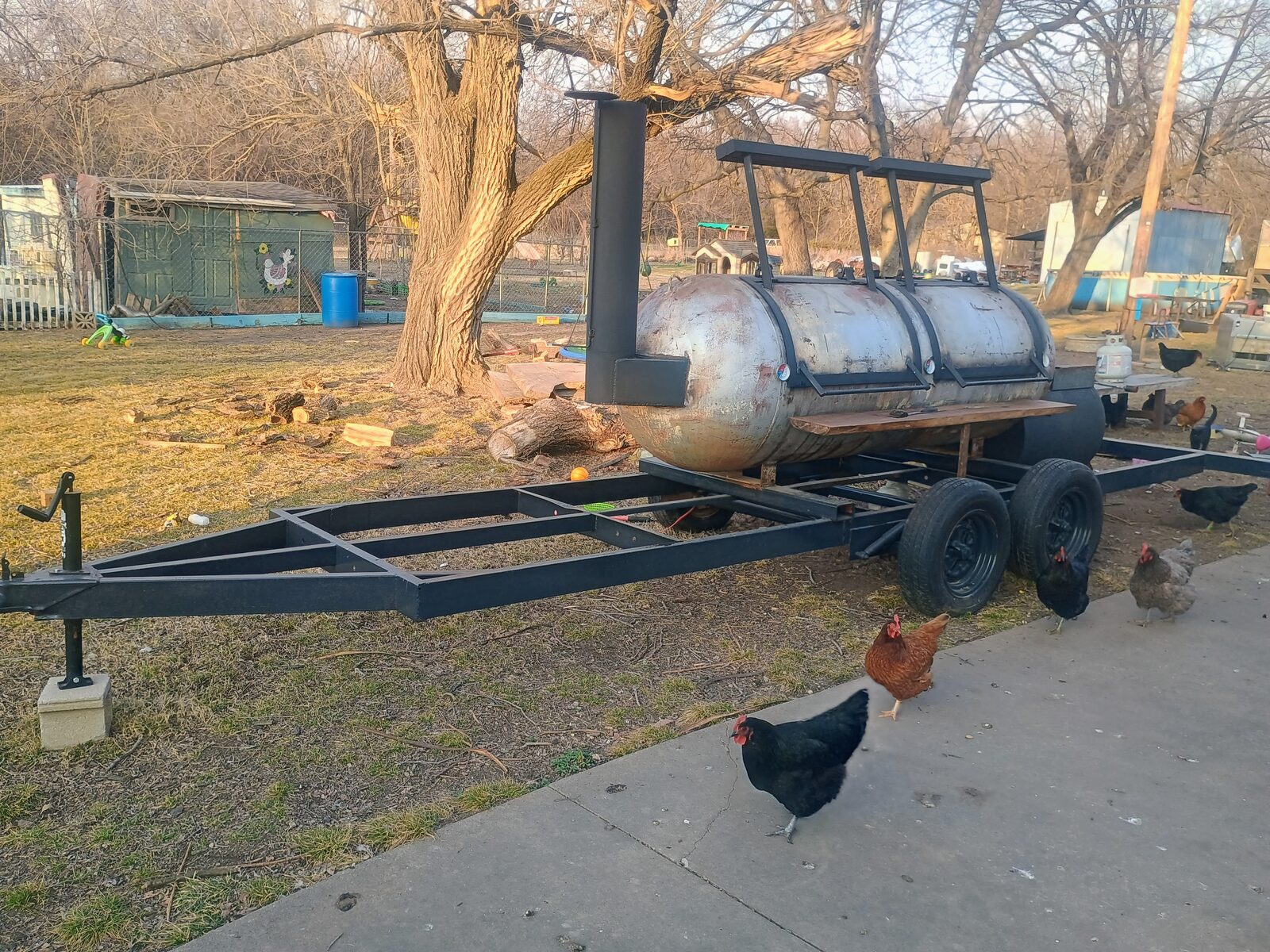
I built a smoker out of a propane tank. A big one — the kind you'd find behind a rural gas station, not the little backyard grill variety. This is a 250-gallon tank that weighs several hundred pounds empty, and the project spanned weeks of cutting, welding, and fabricating in the driveway.
The idea: an offset smoker with a separate firebox, mounted on a roller frame so the whole tank can rotate during the build. No shop, no lift — just a MIG welder, an angle grinder, and a driveway.
Getting the Tank Home
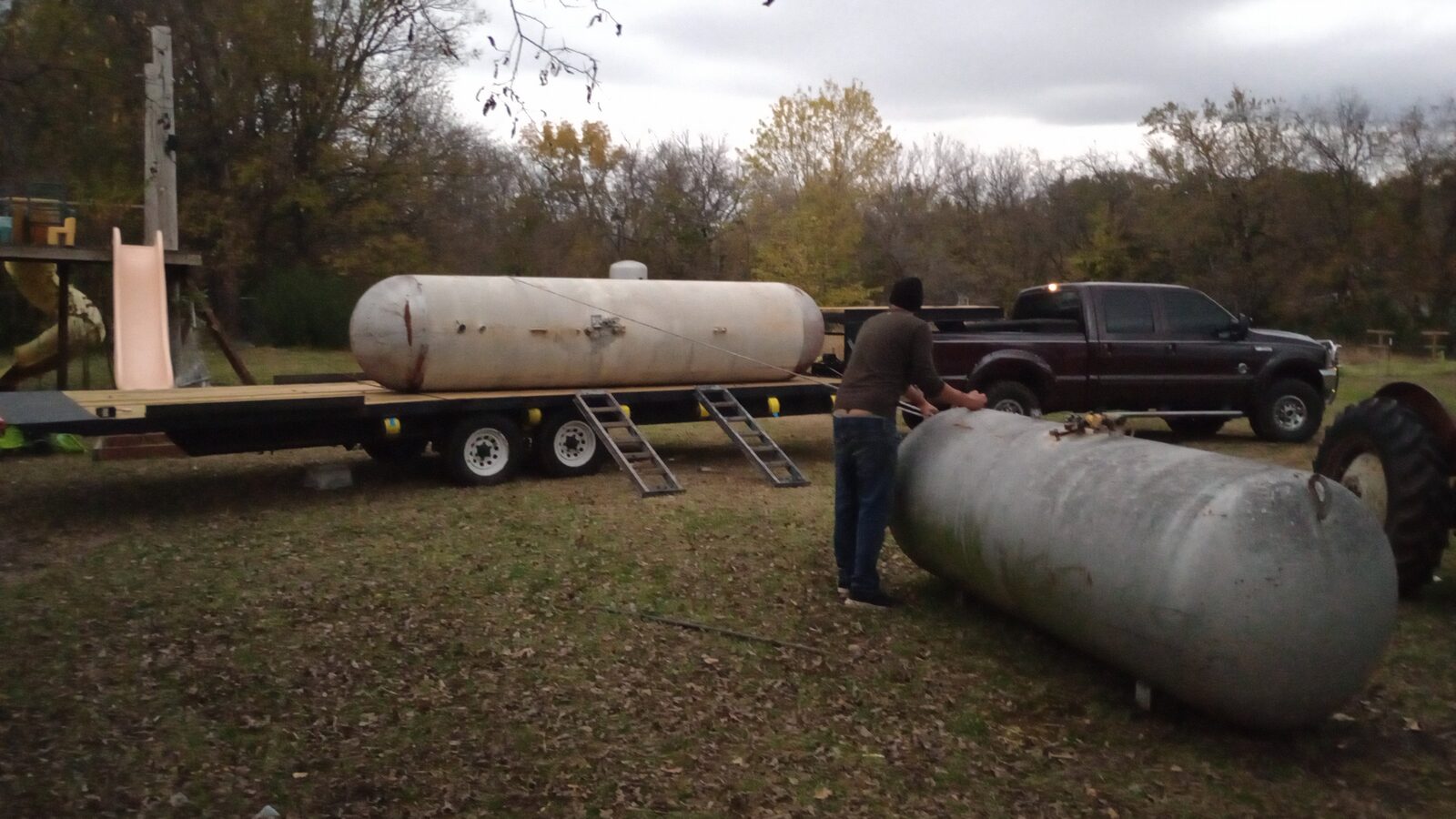
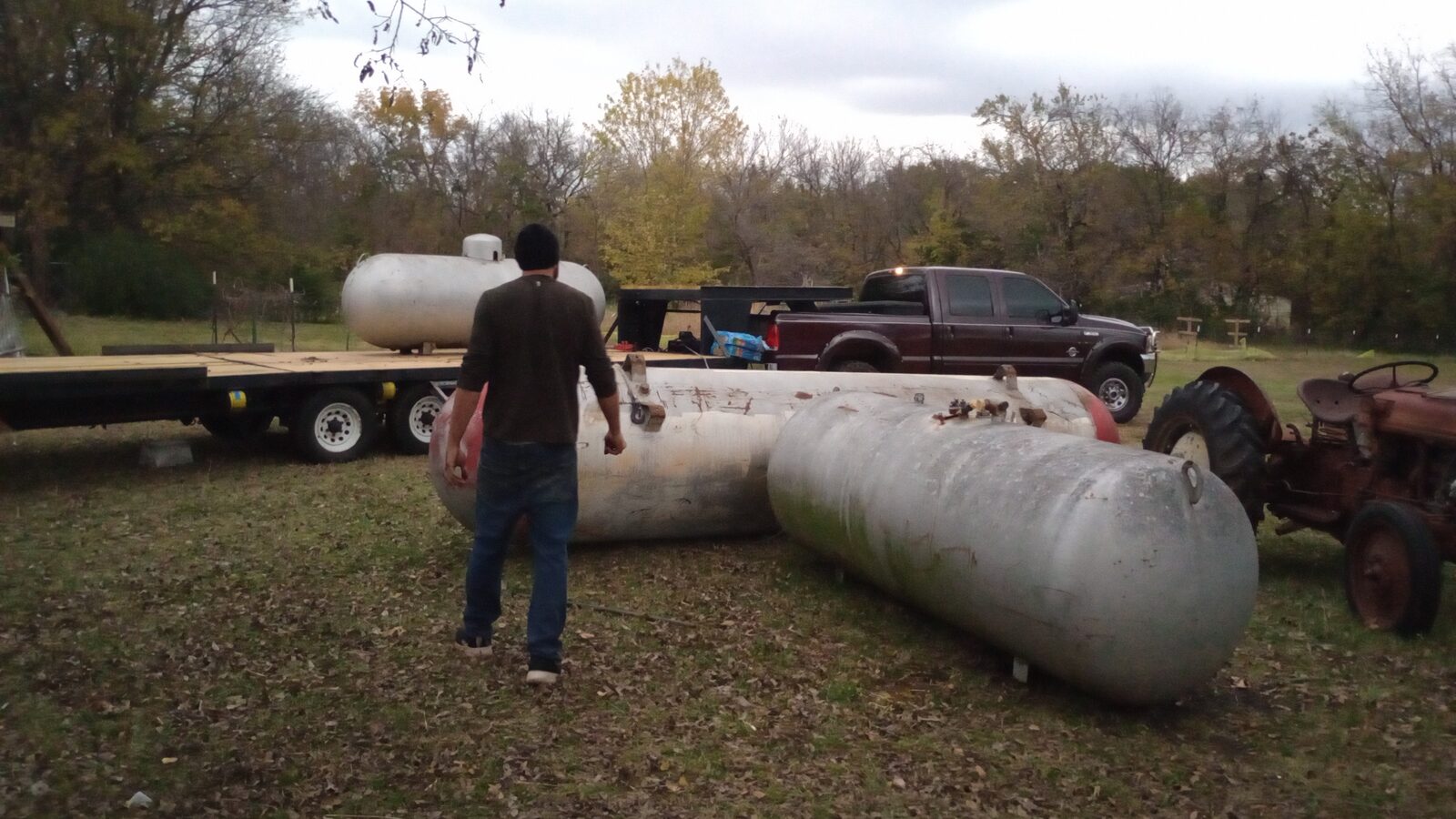
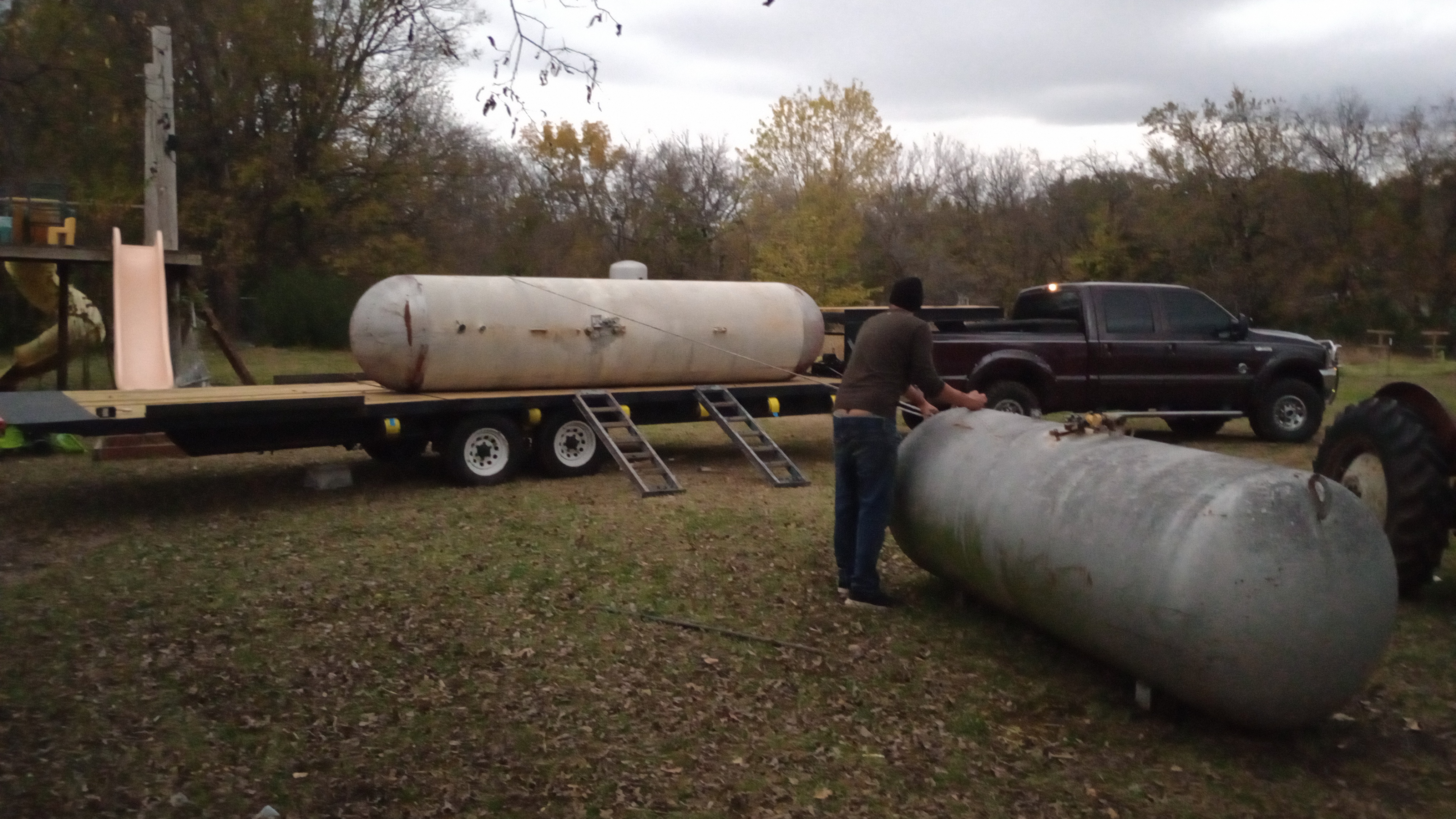
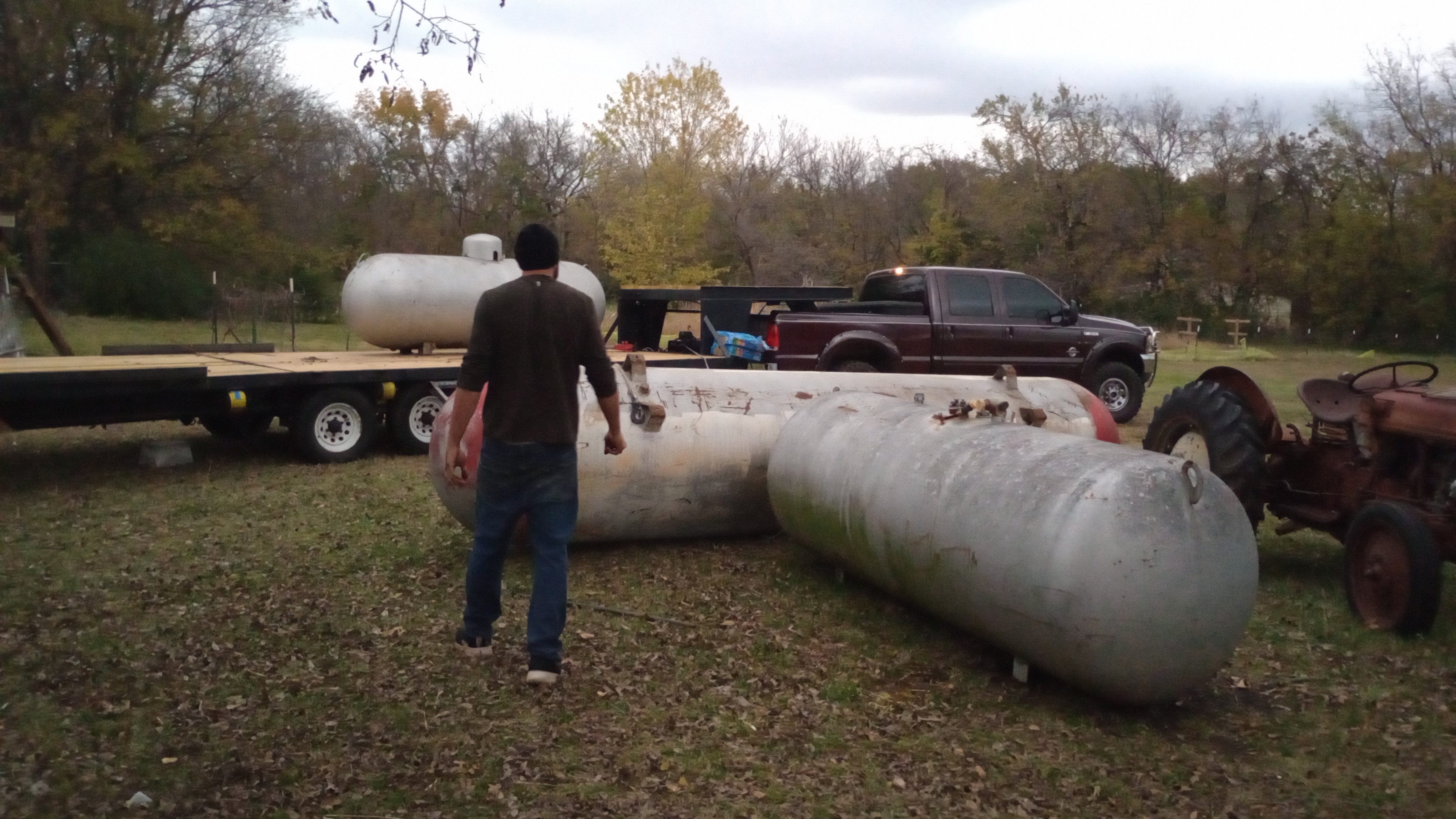
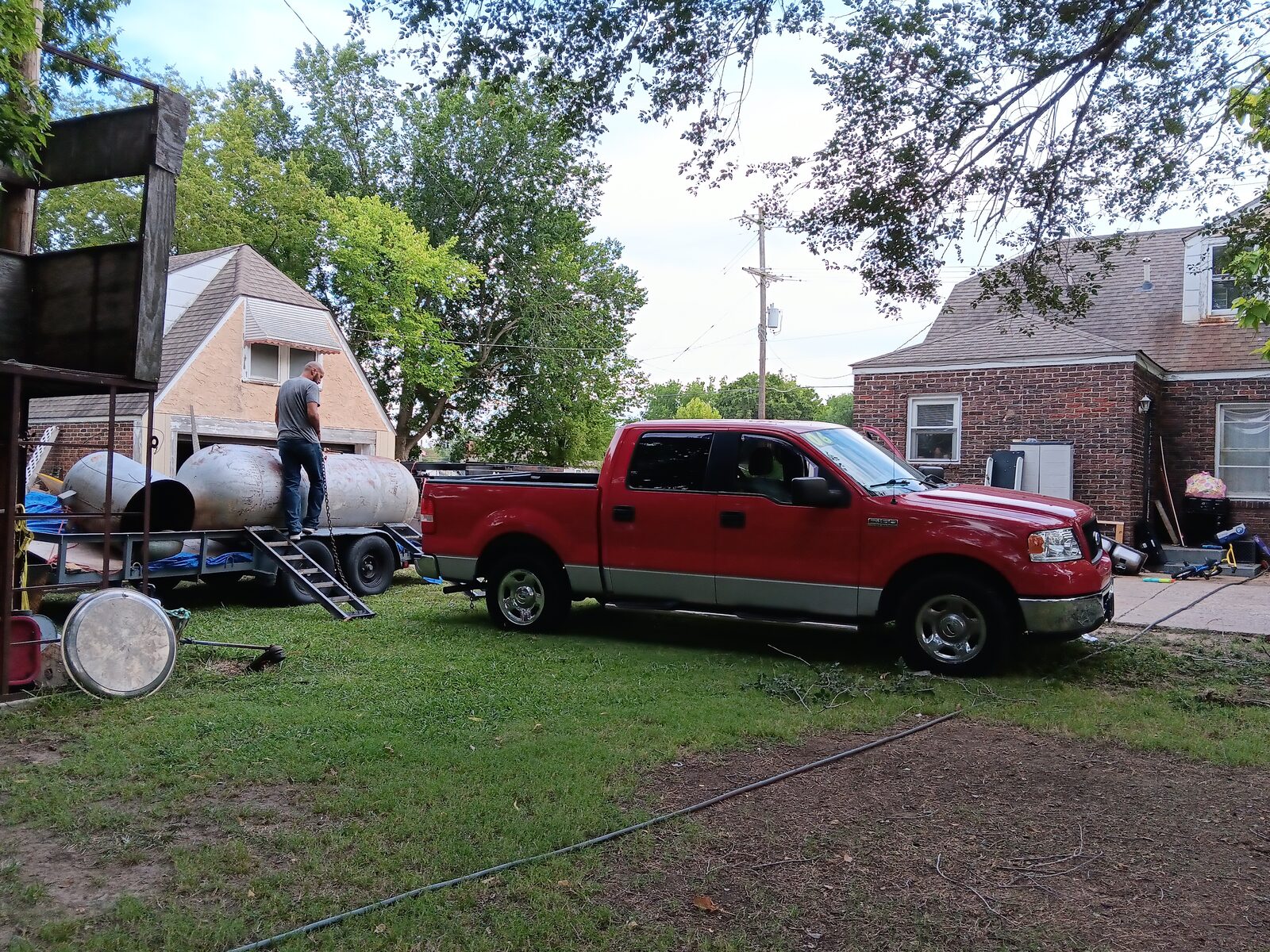
Step one was hauling the tank. I picked up a decommissioned 250-gallon propane tank and strapped it to a trailer. The kids immediately claimed it.
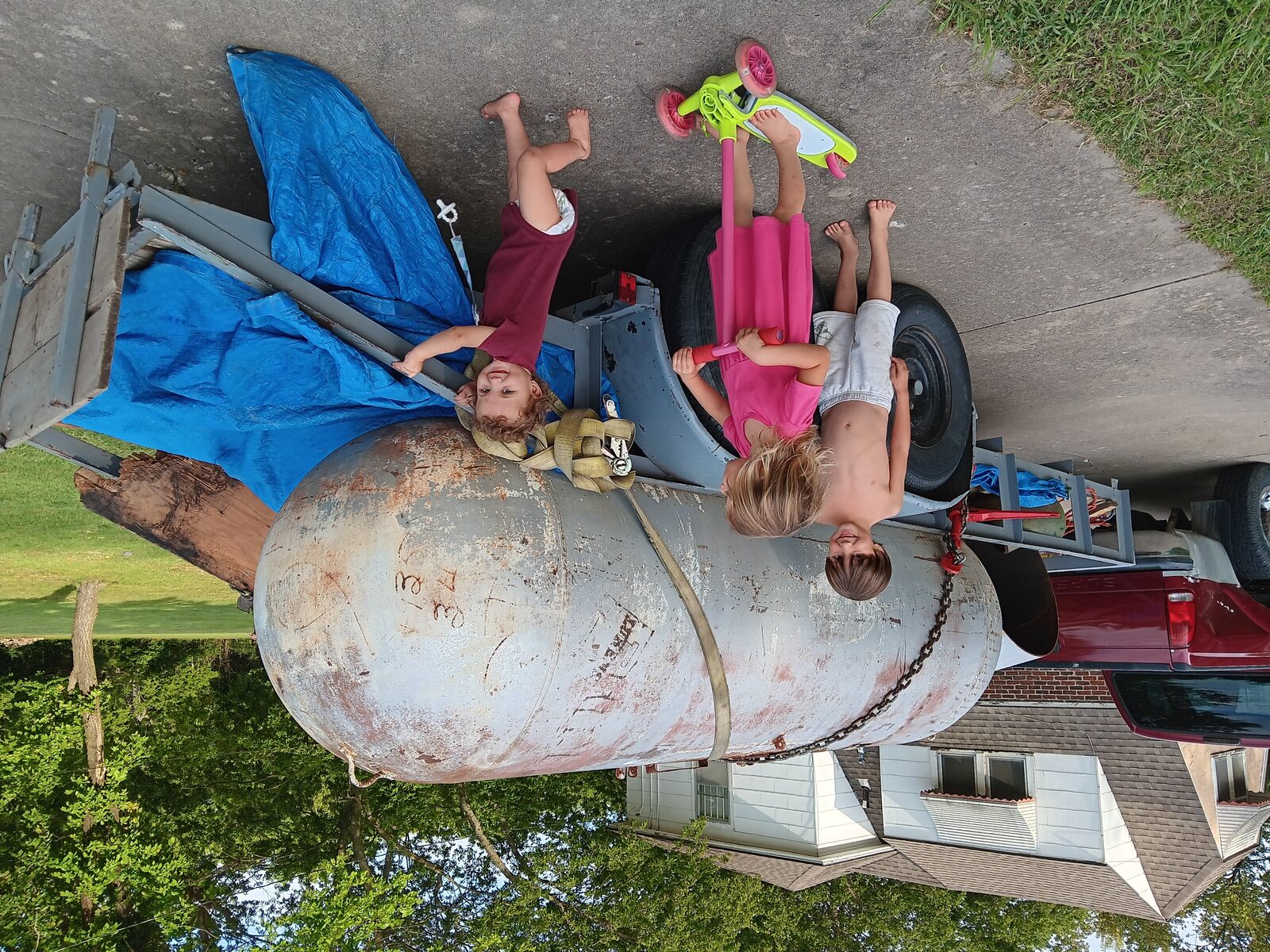
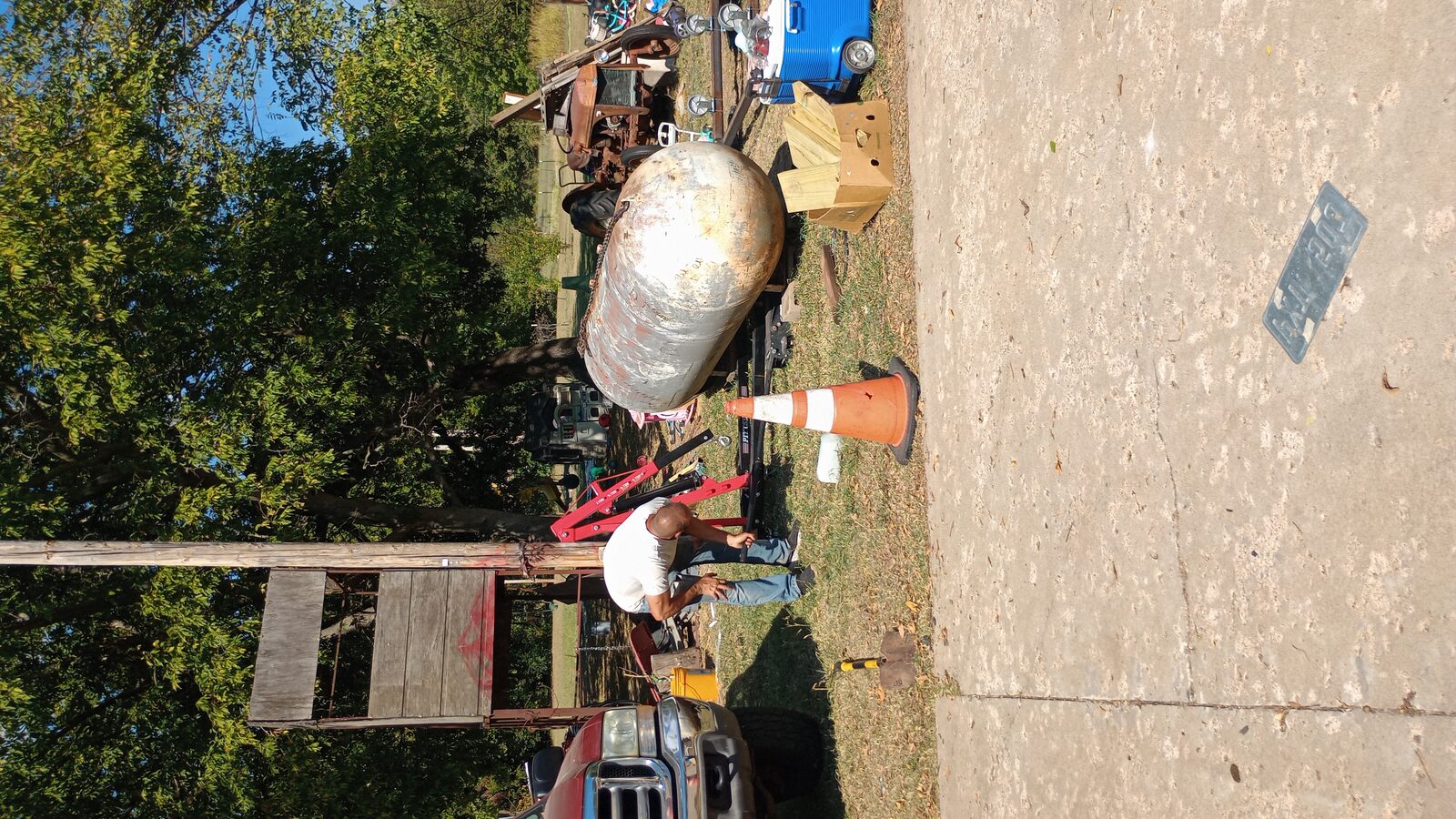
Three kids, one 250-gallon tank, and a driveway. The unloading involved a truck, a chain, and some creative physics.
The Roller Frame
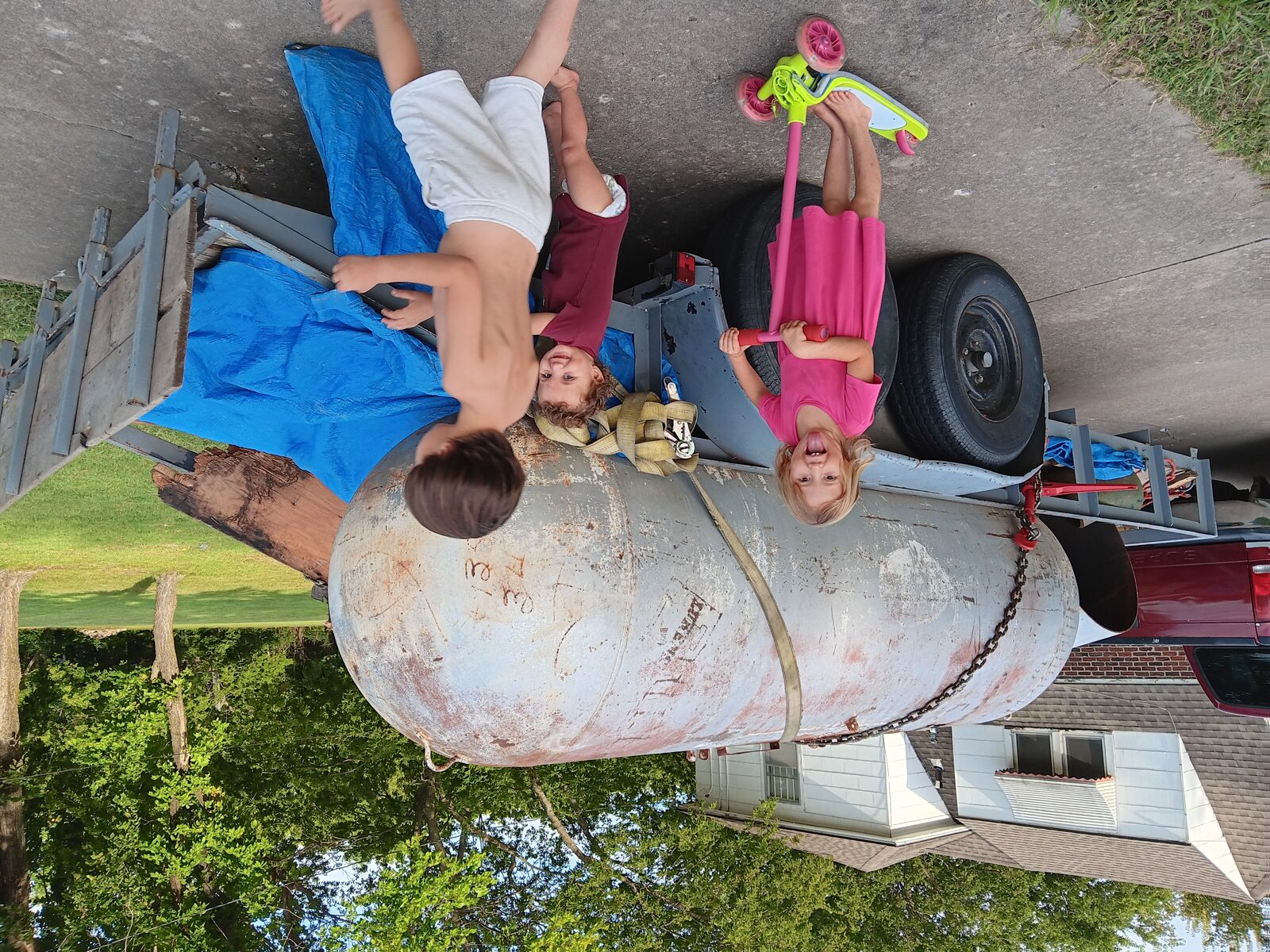
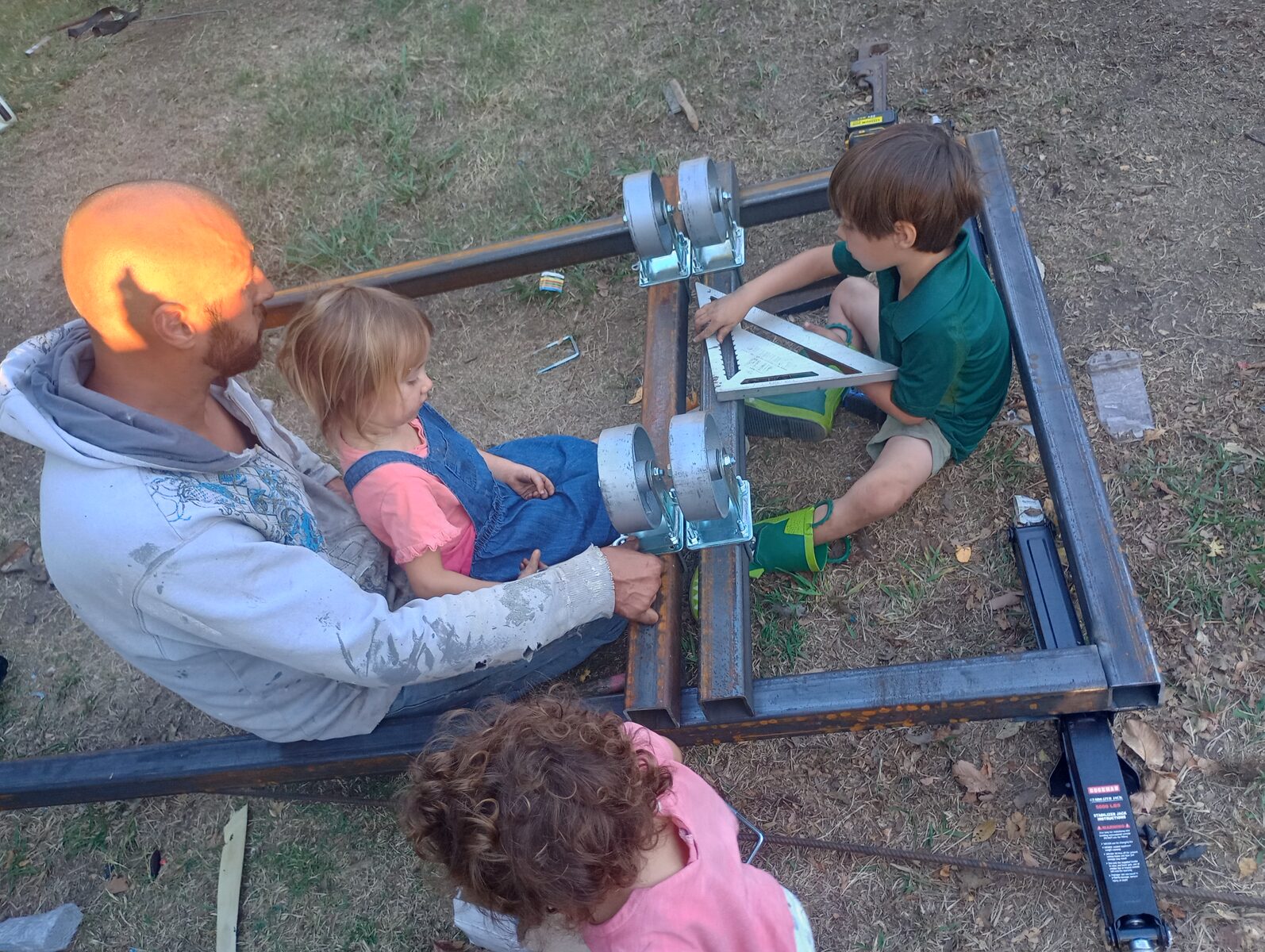
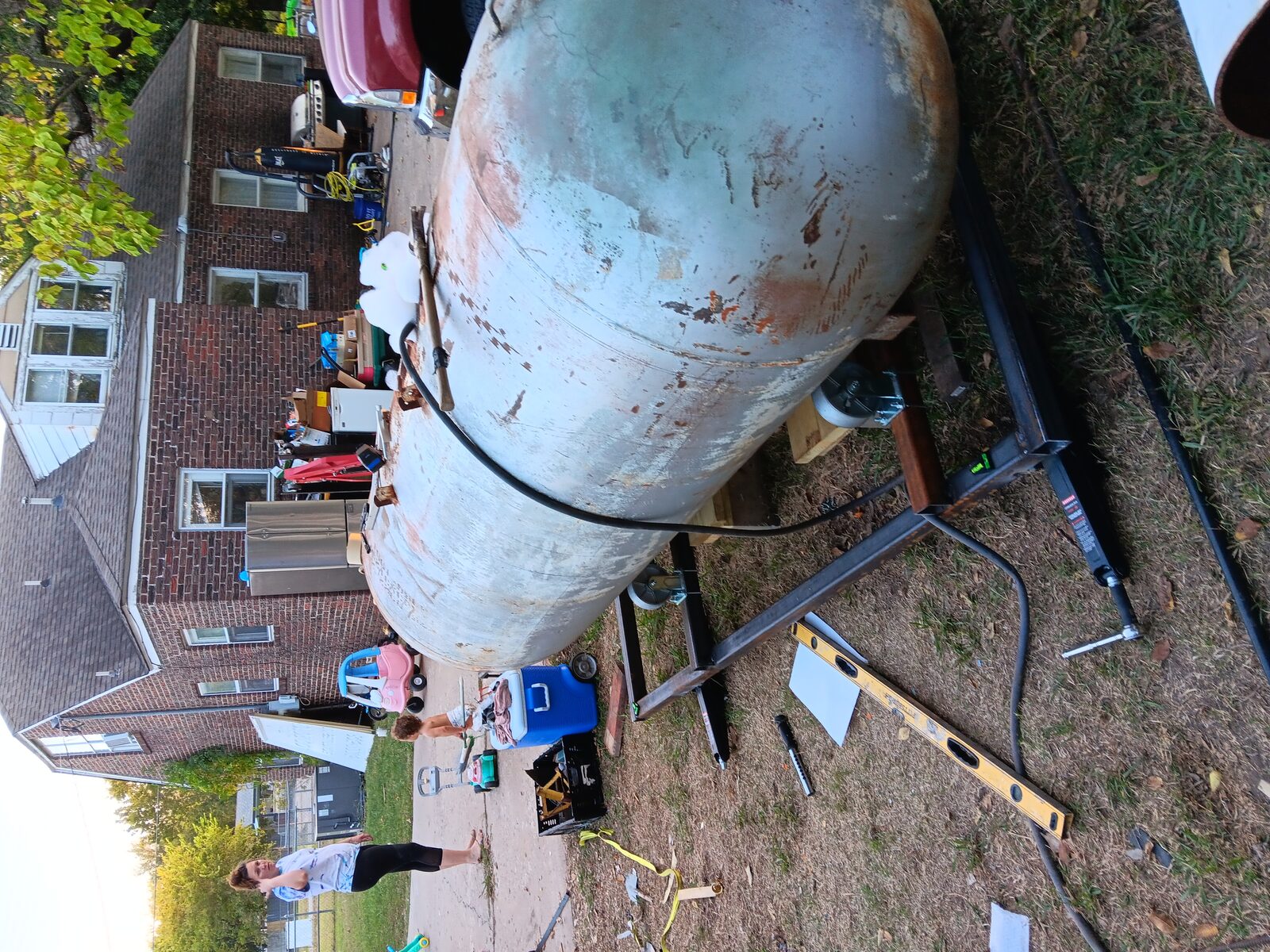
Before you can work on a tank this size, you need a way to spin it. I welded a steel frame with caster wheels — the tank sits in the cradle and you can rotate it to access any side without needing a crane or a crew. Just physics.
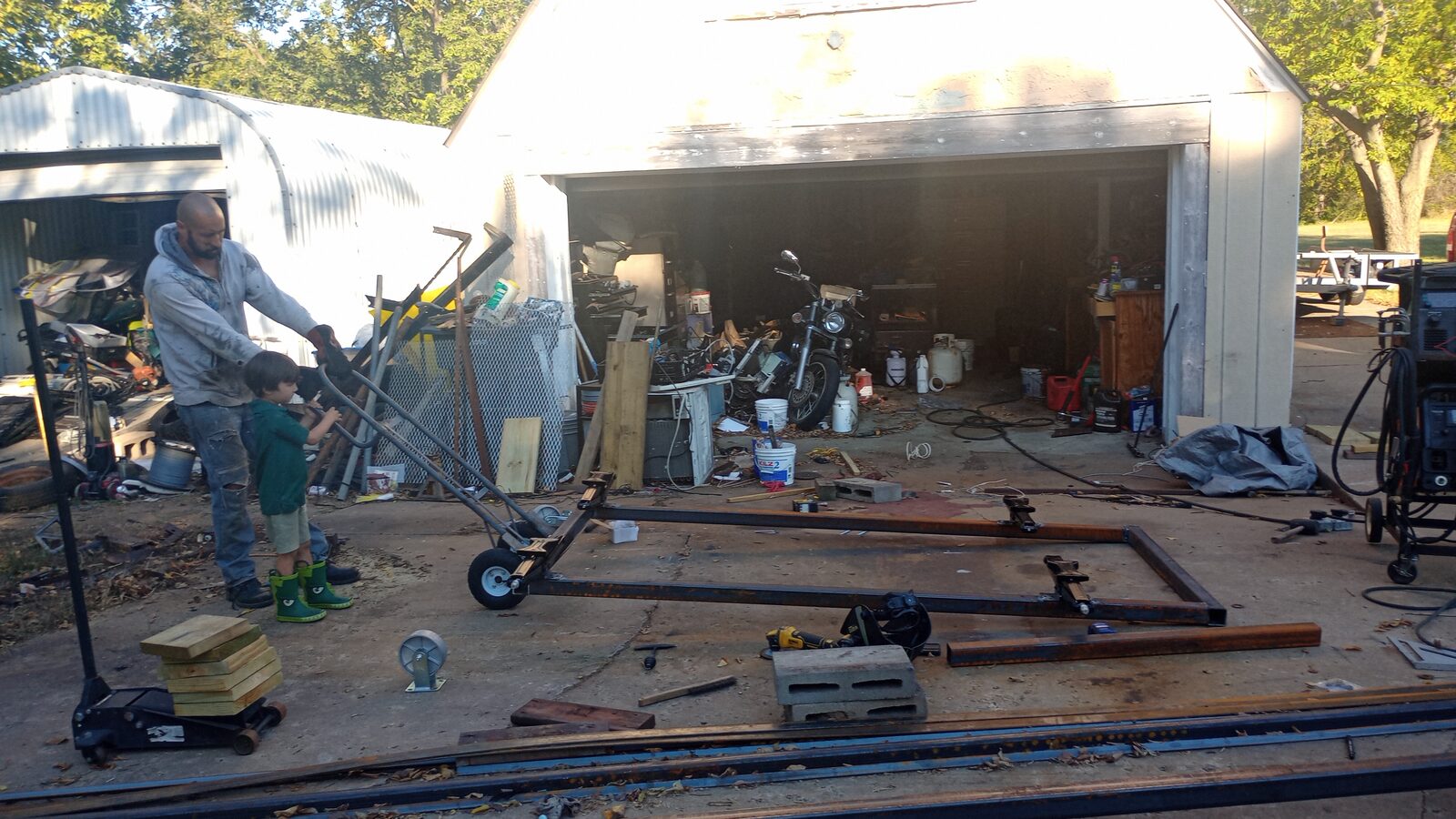
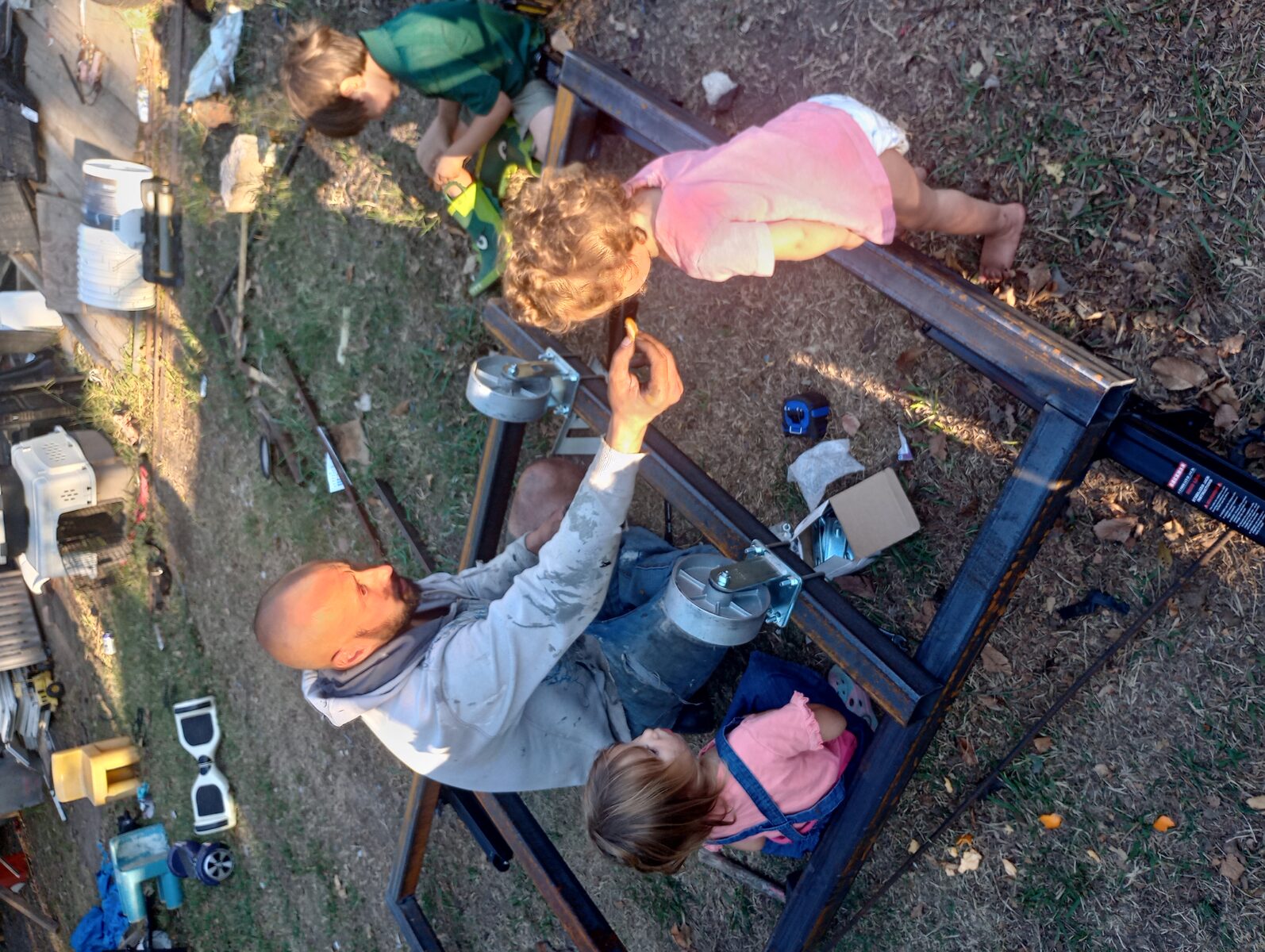
The crew supervised the assembly. Quality control is important.
Mounting the Tank
With the roller built, the tank goes up on the frame. A level and some careful positioning — this thing needs to sit right so the doors seal properly and smoke flows the way you want it to.
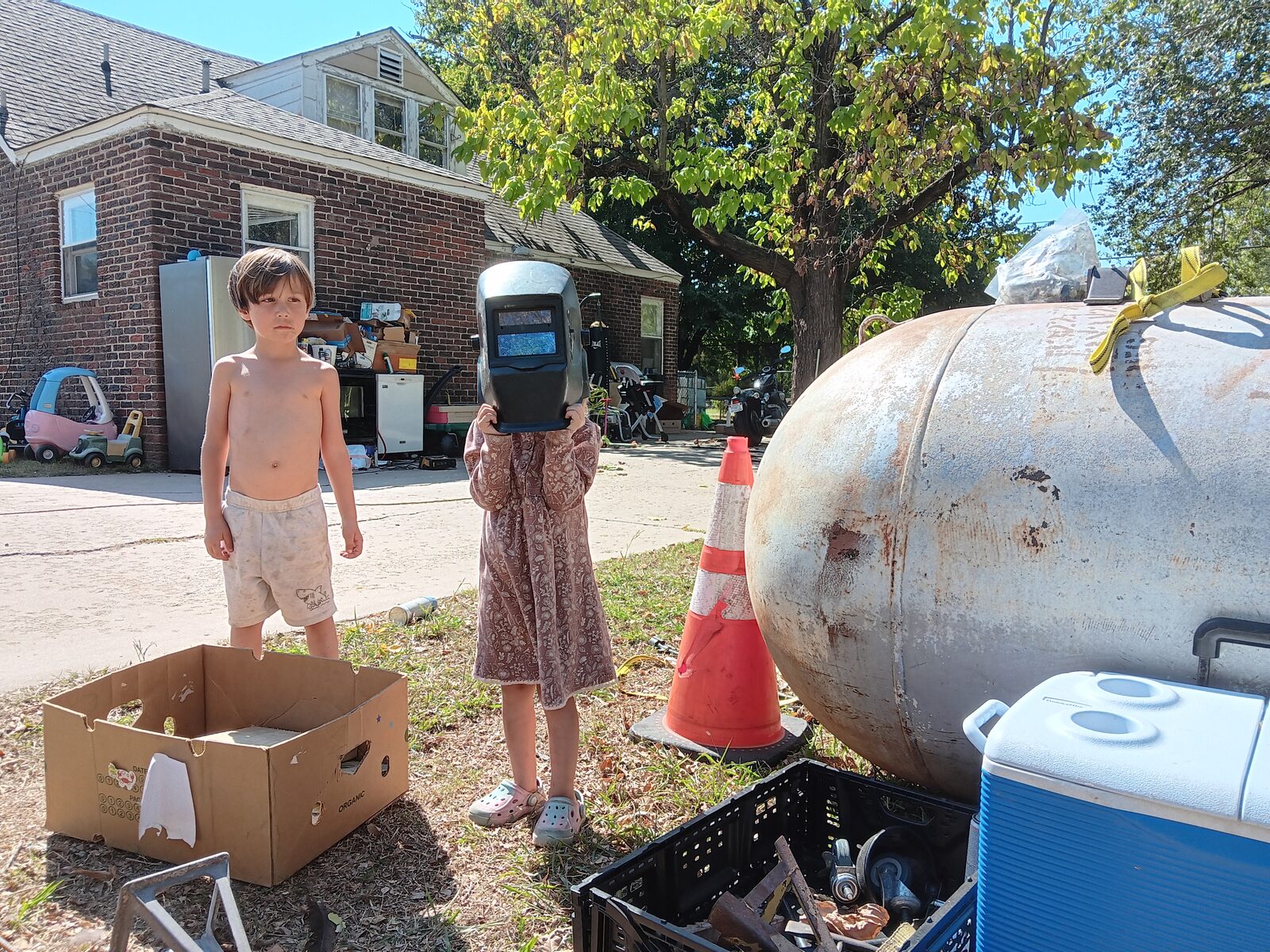
The shop assistants showed up with their own PPE.
Cutting and Welding
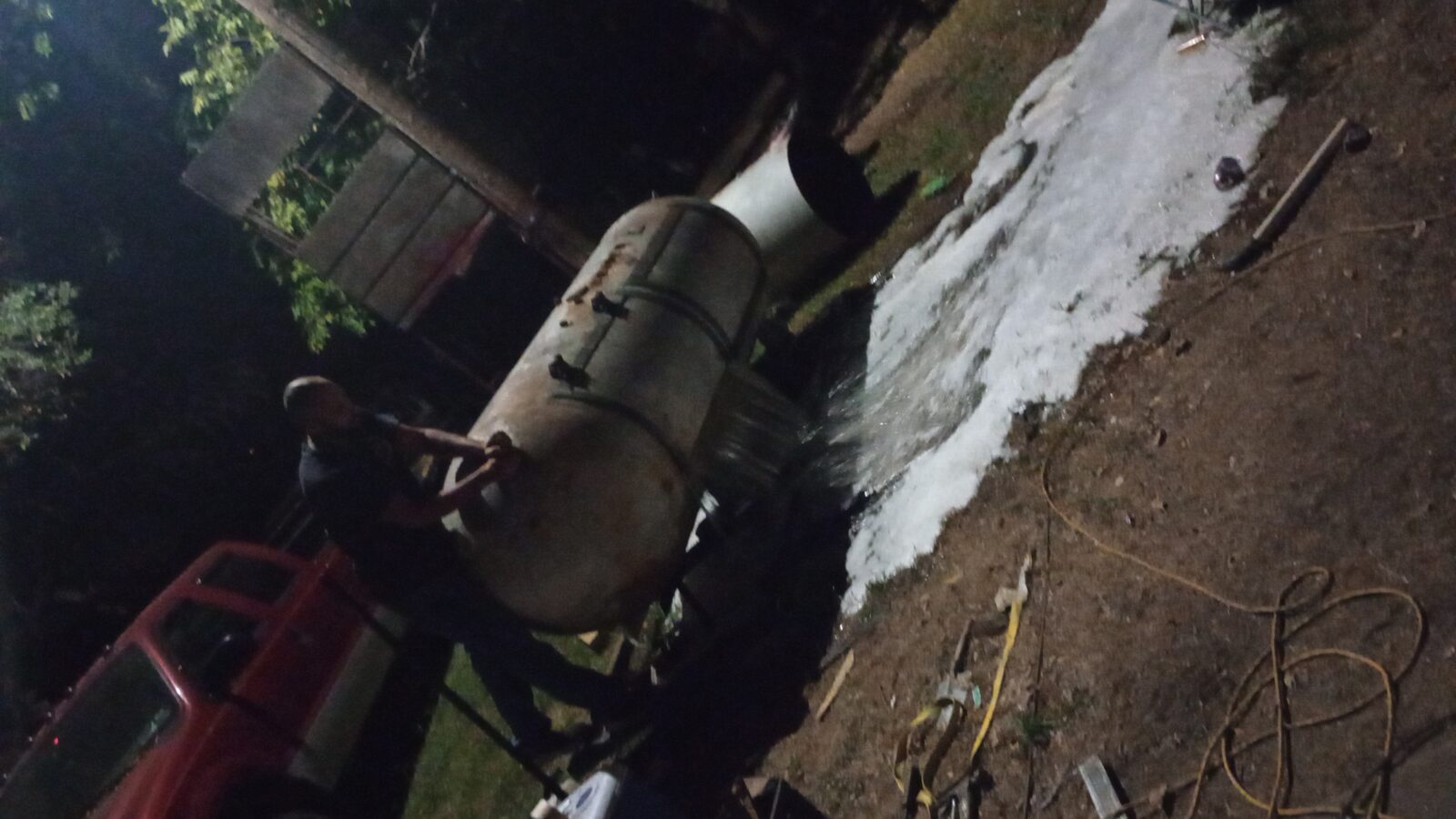
This is where it gets real. Cutting into a propane tank is not something you do casually — you purge it, fill it with water, and then start cutting with full respect for what used to be inside. Doors, firebox opening, chimney port — every cut changes the structural integrity of the tank, so you weld as you go.
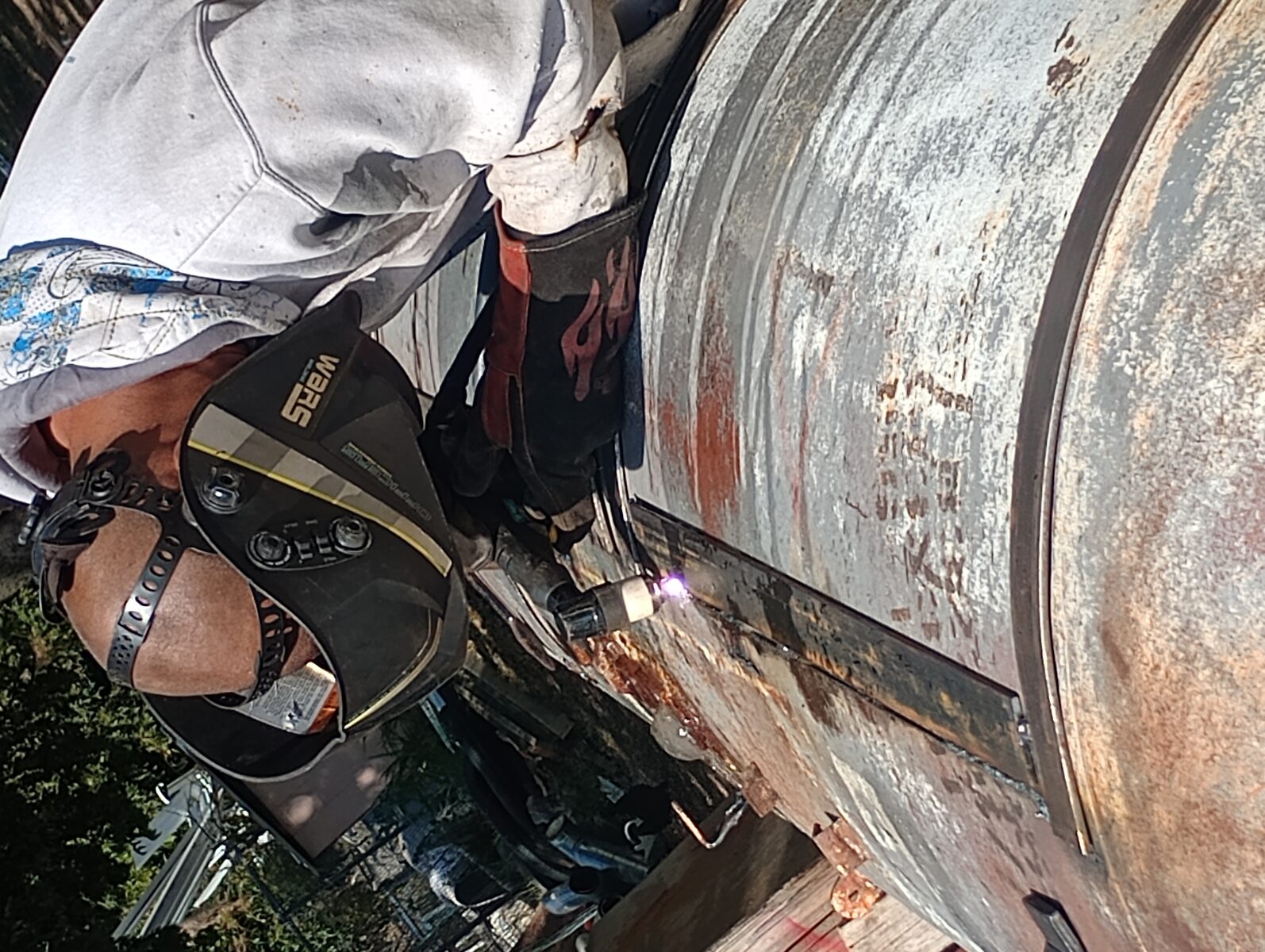
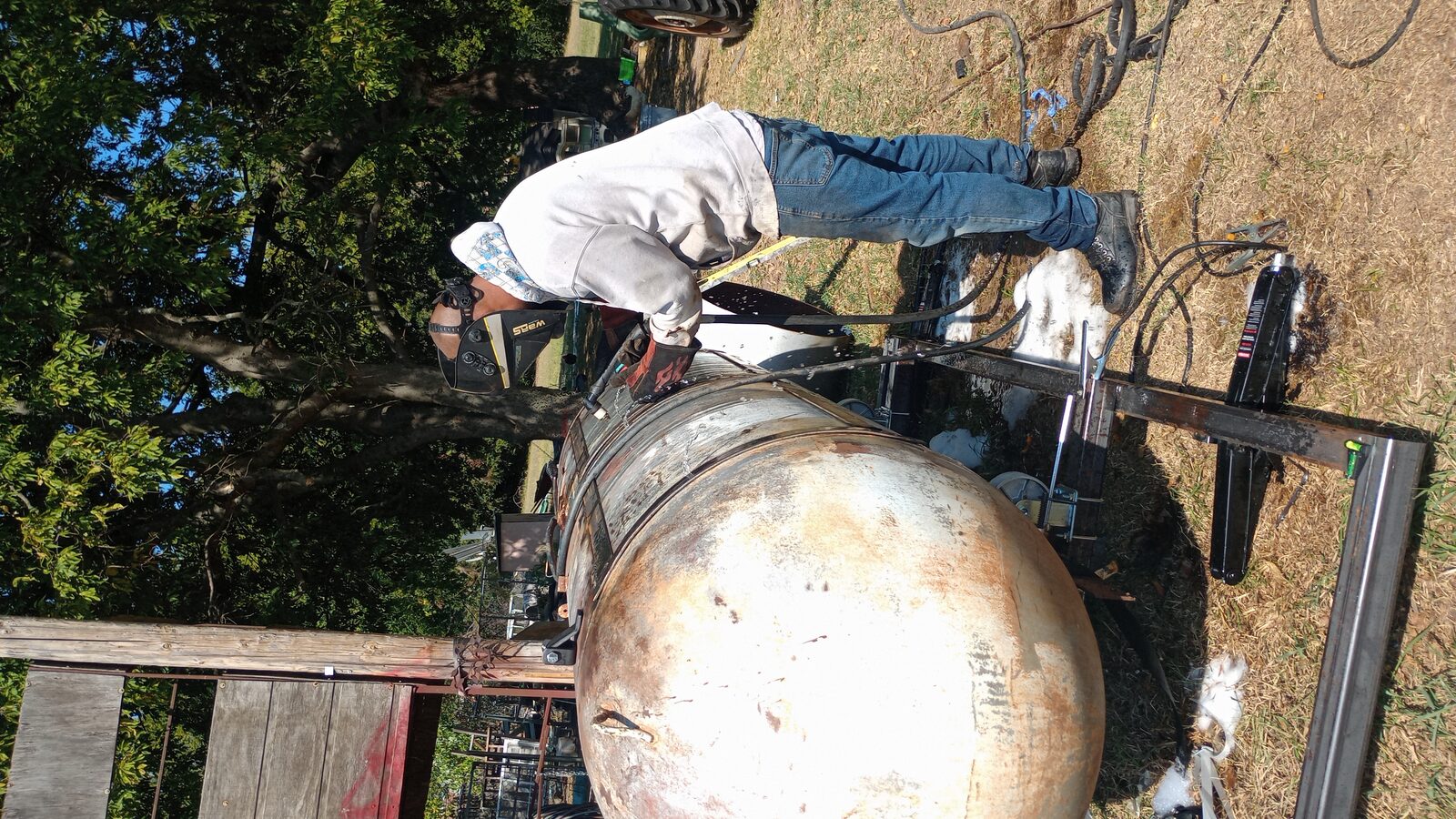
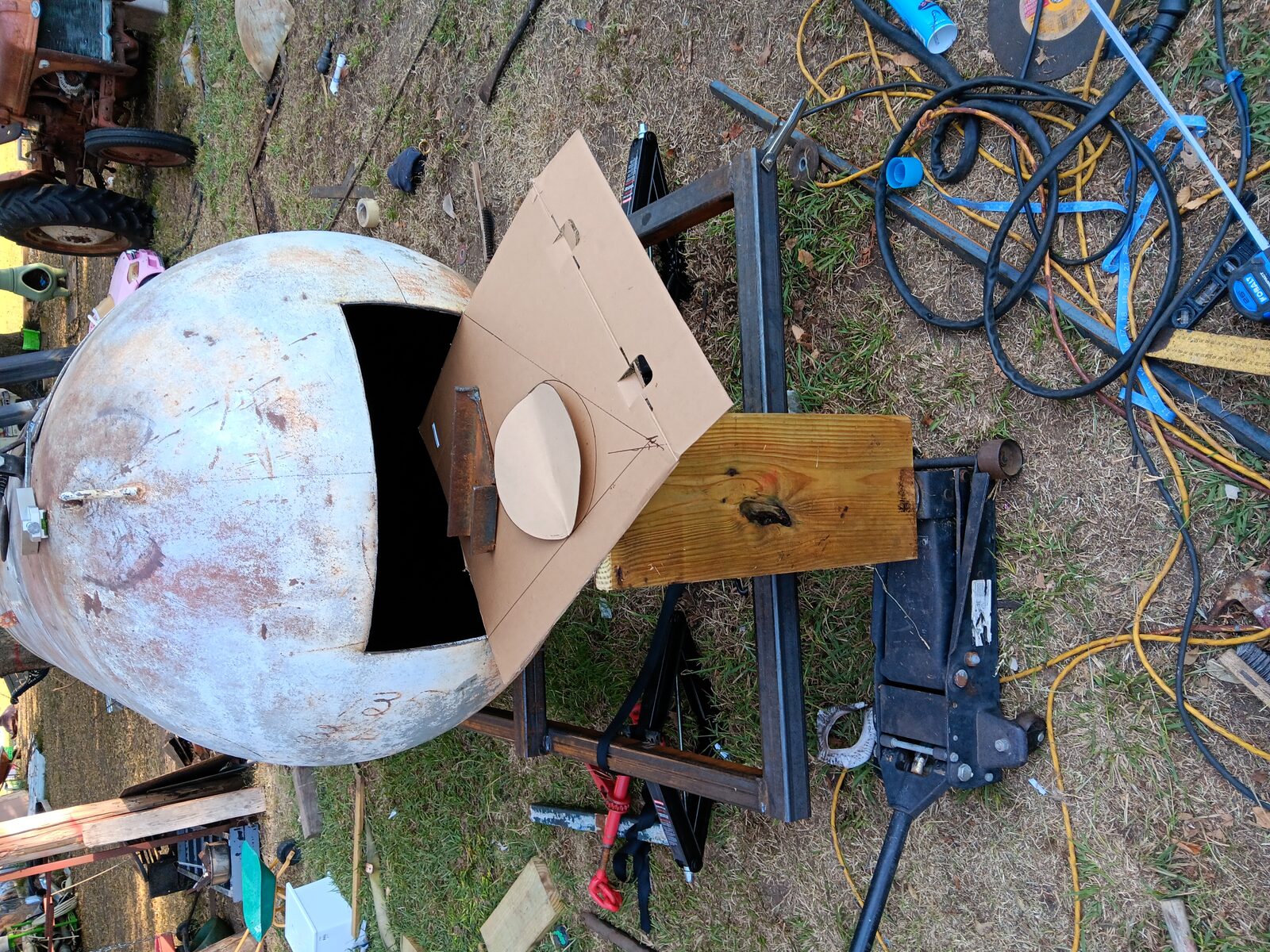
The firebox gets its own door. I used cardboard templates to plan the openings before cutting — measure twice, cut once is real when you're working with 1/4" steel that you can't un-cut.
The Chimney
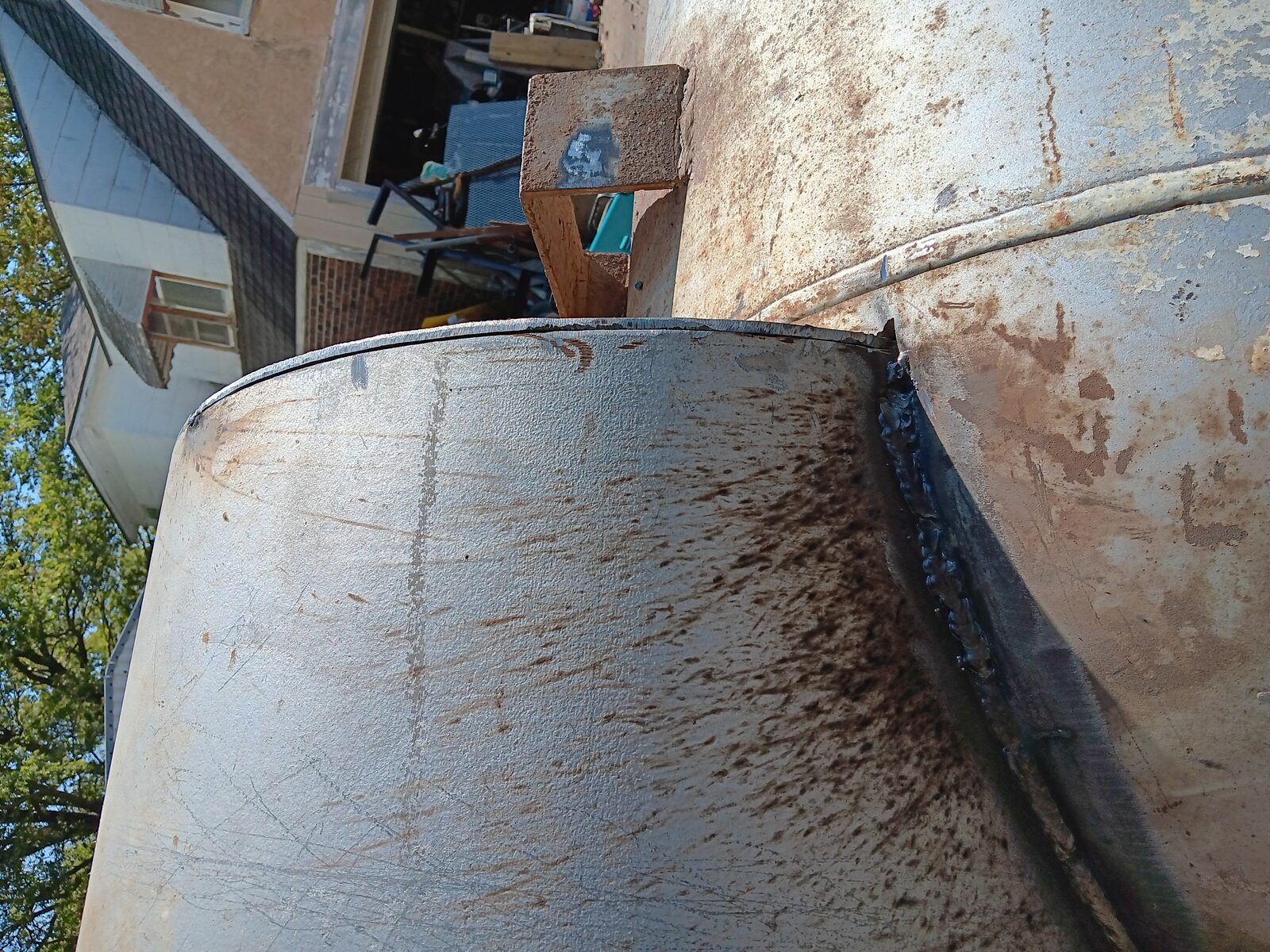
A square tube stub welded to the top of the tank where the stack will go. The weld bead here needs to be solid — this joint sees a lot of thermal cycling.
The Firebox
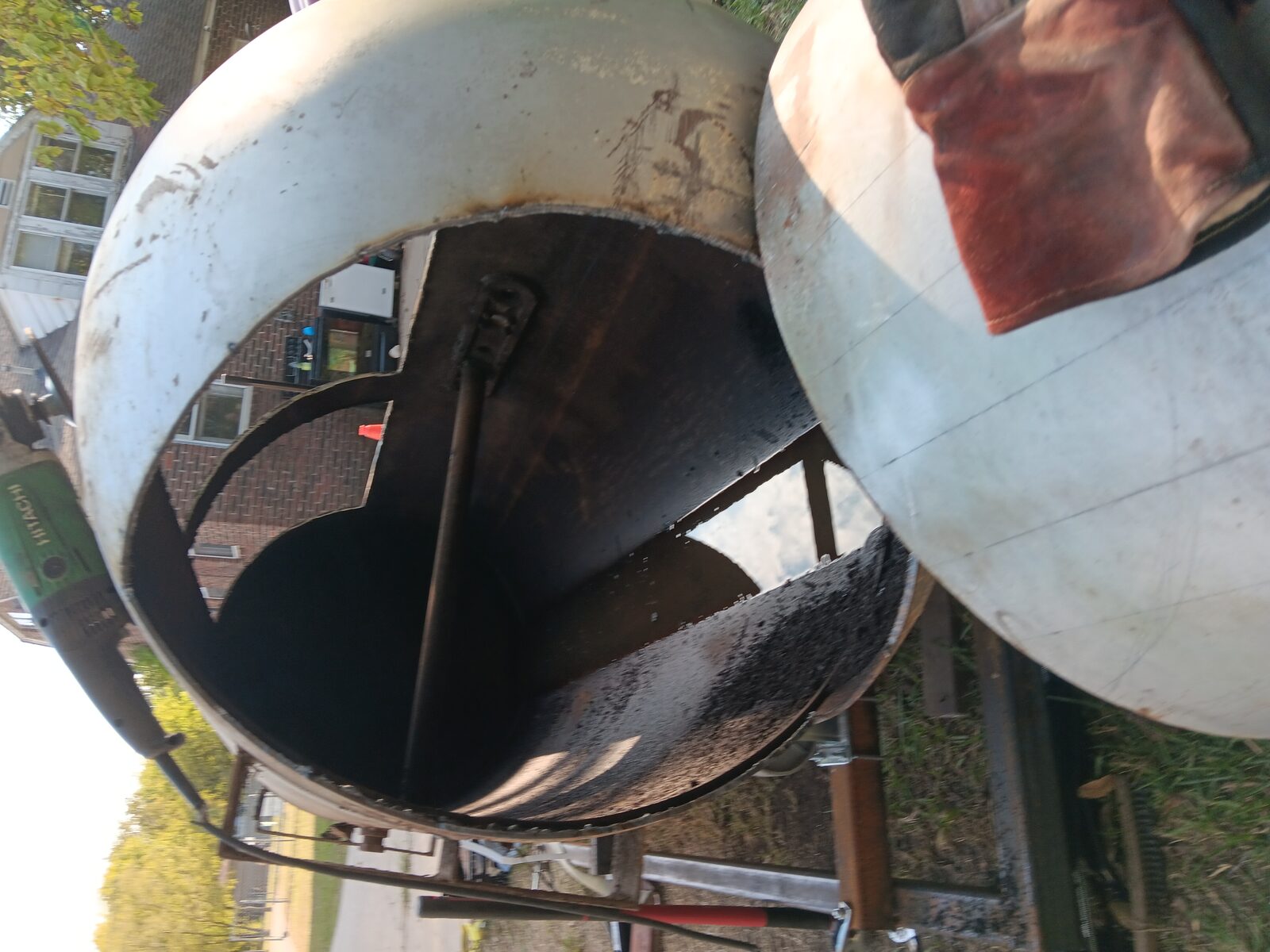
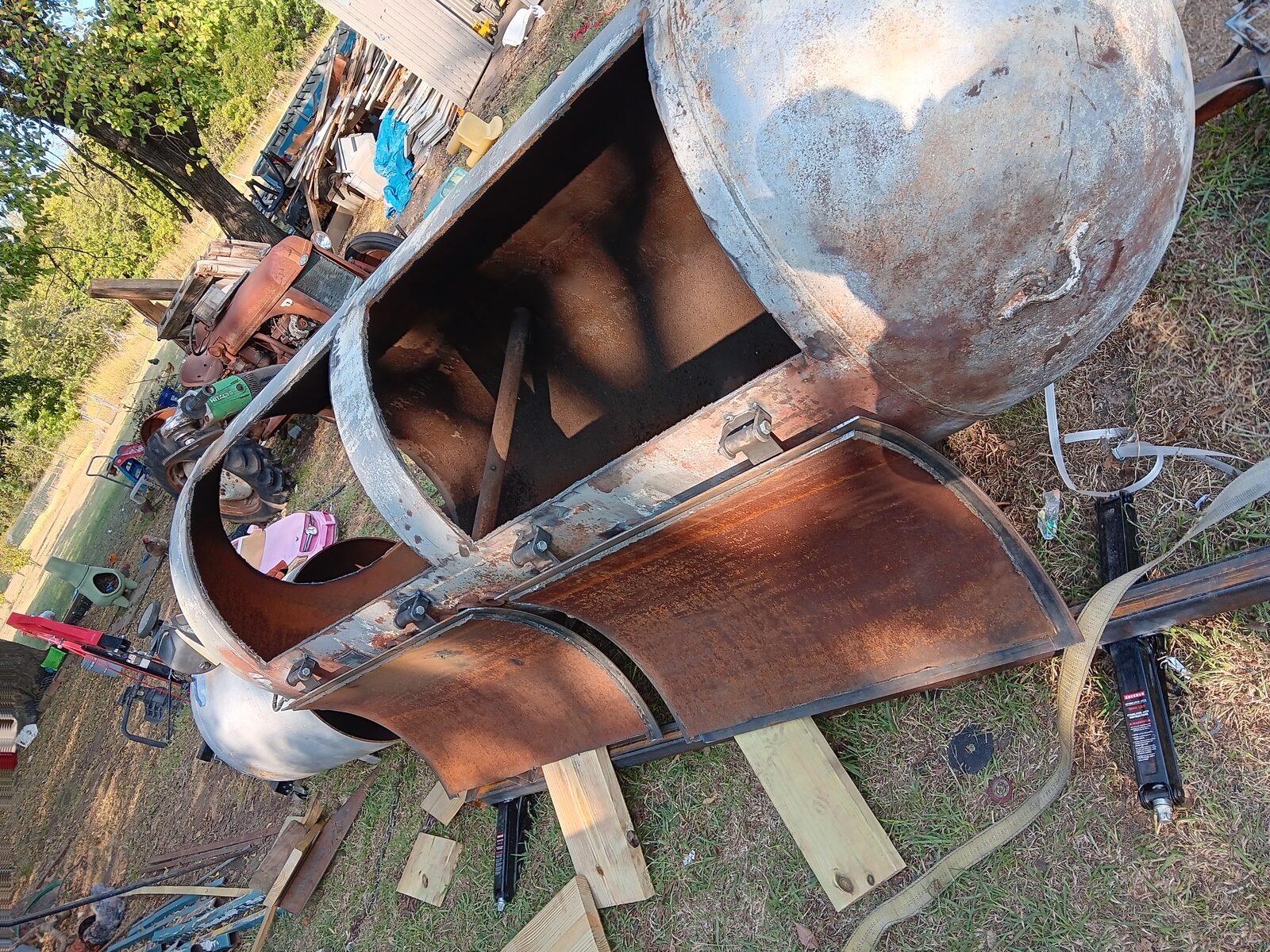
The firebox is where the magic happens. Cut the end of the tank, weld in a baffle plate, build the fire grate, and fabricate a door that seals well enough to control airflow. The inside of this section gets hot — everything here is heavy steel.
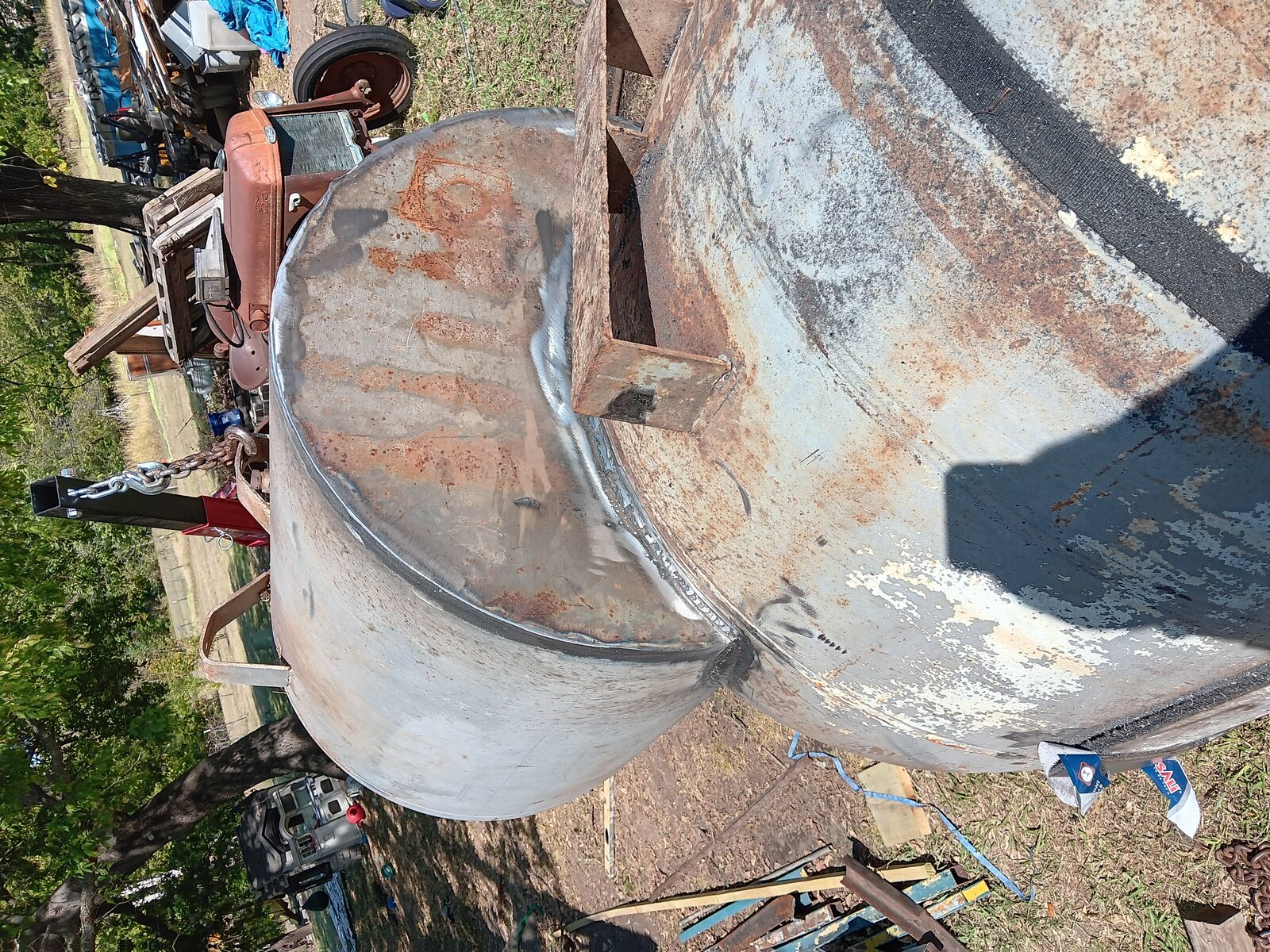
Internal Fabrication
Cooking grates, internal supports, and the structure that holds everything in place. The grates need to be removable for cleaning but solid enough to hold a full brisket.
The Cooking Chamber
With the lid hinged and the grates installed, the cooking chamber starts to look like an actual smoker. The expanded metal grate gives good airflow while supporting the meat. The lid opens on heavy hinges welded to the tank.
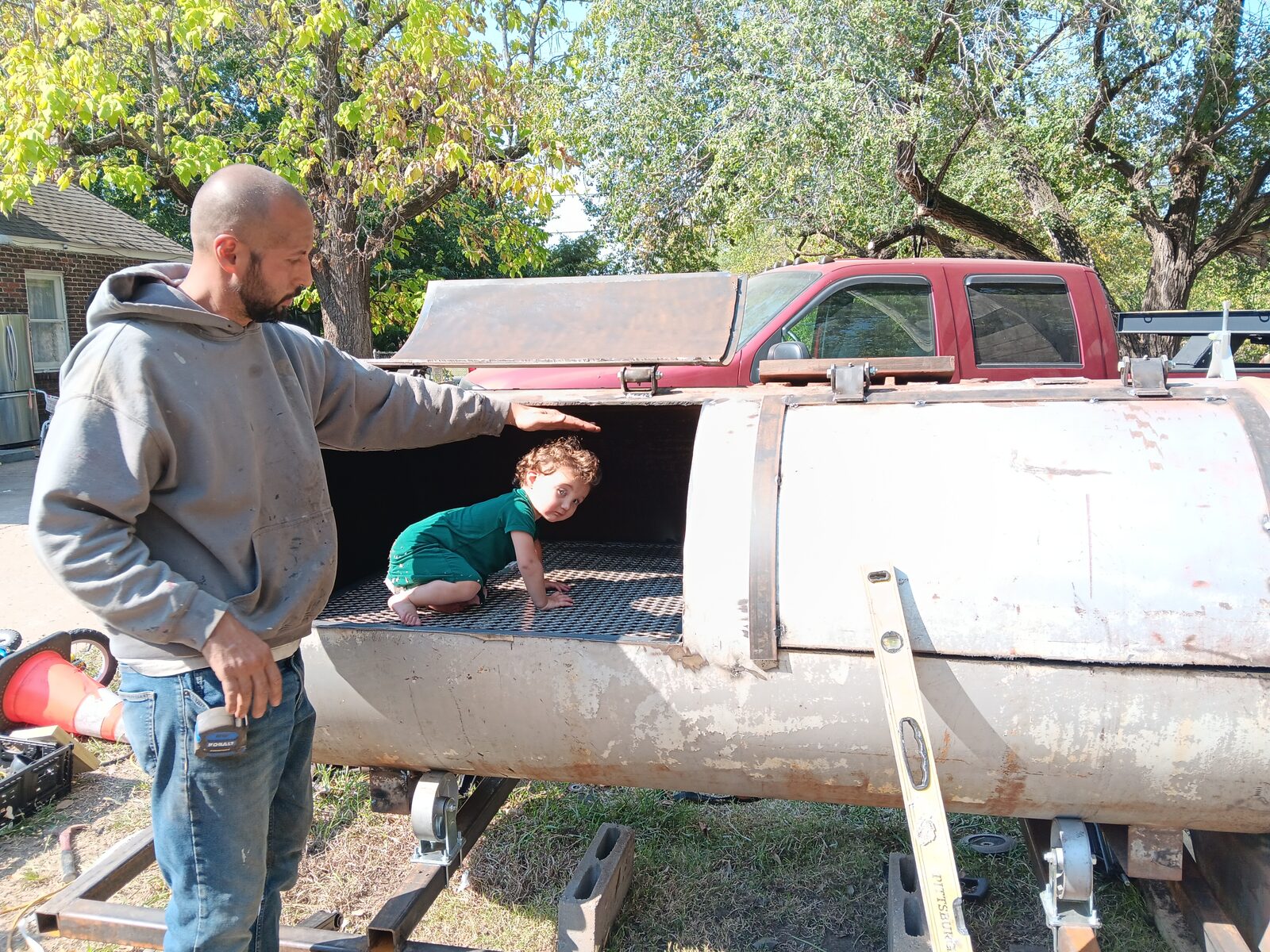
The ultimate quality test: if a toddler can crawl around inside it, the chamber is big enough.
Late Nights
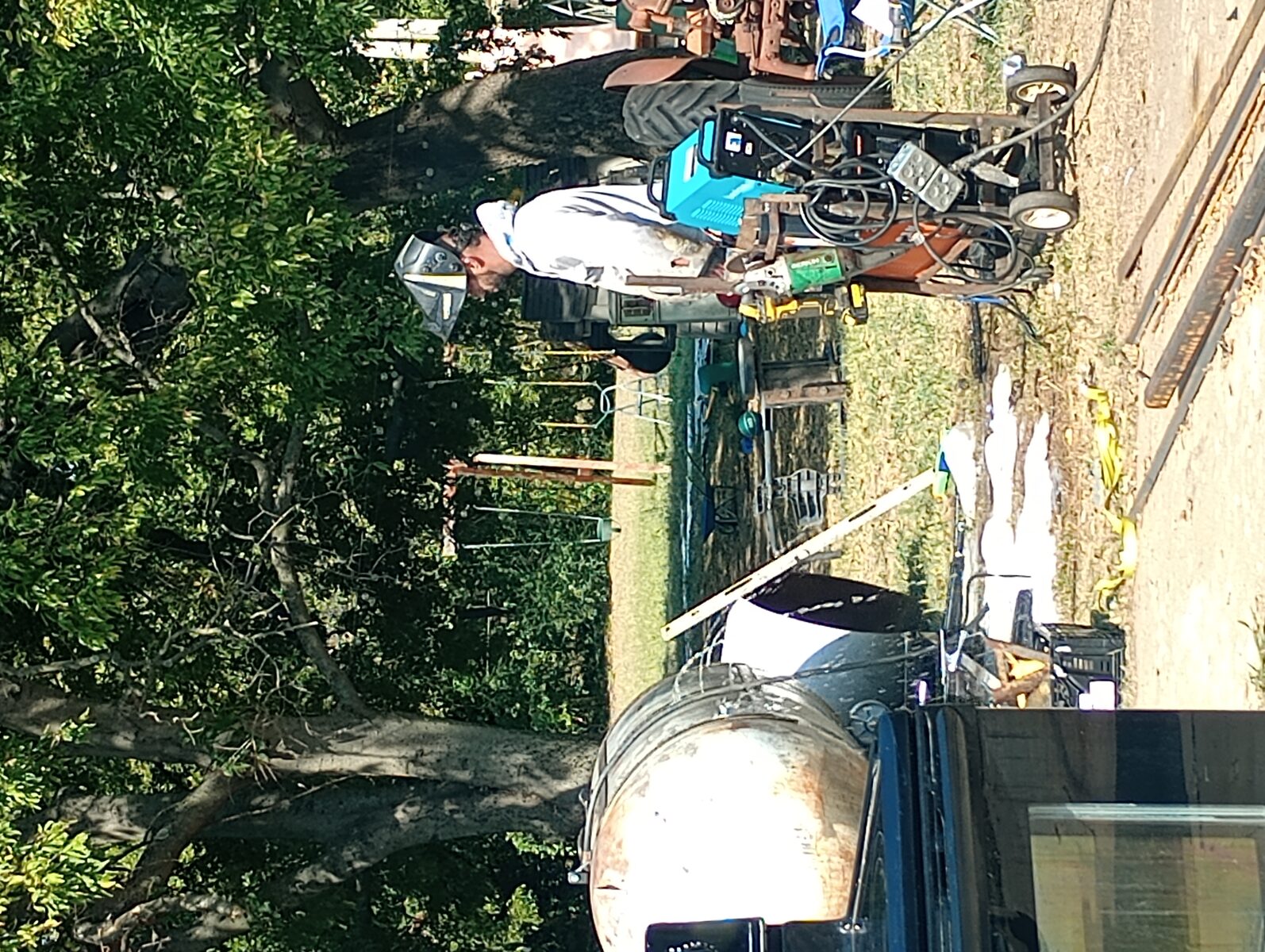
Building something this size means late nights in the driveway. Arc light, sparks, neighbors wondering what's going on. This is driveway fabrication — no shop, no overhead crane, just determination and extension cords.
Chimney and Firebox Door
The chimney stack went on next — full-height pipe welded to the stub. This is where the draw comes from. Get the stack height wrong and your smoker won't pull air through the firebox properly. Too short and you get no draft. Too tall and you pull too much heat through too fast.
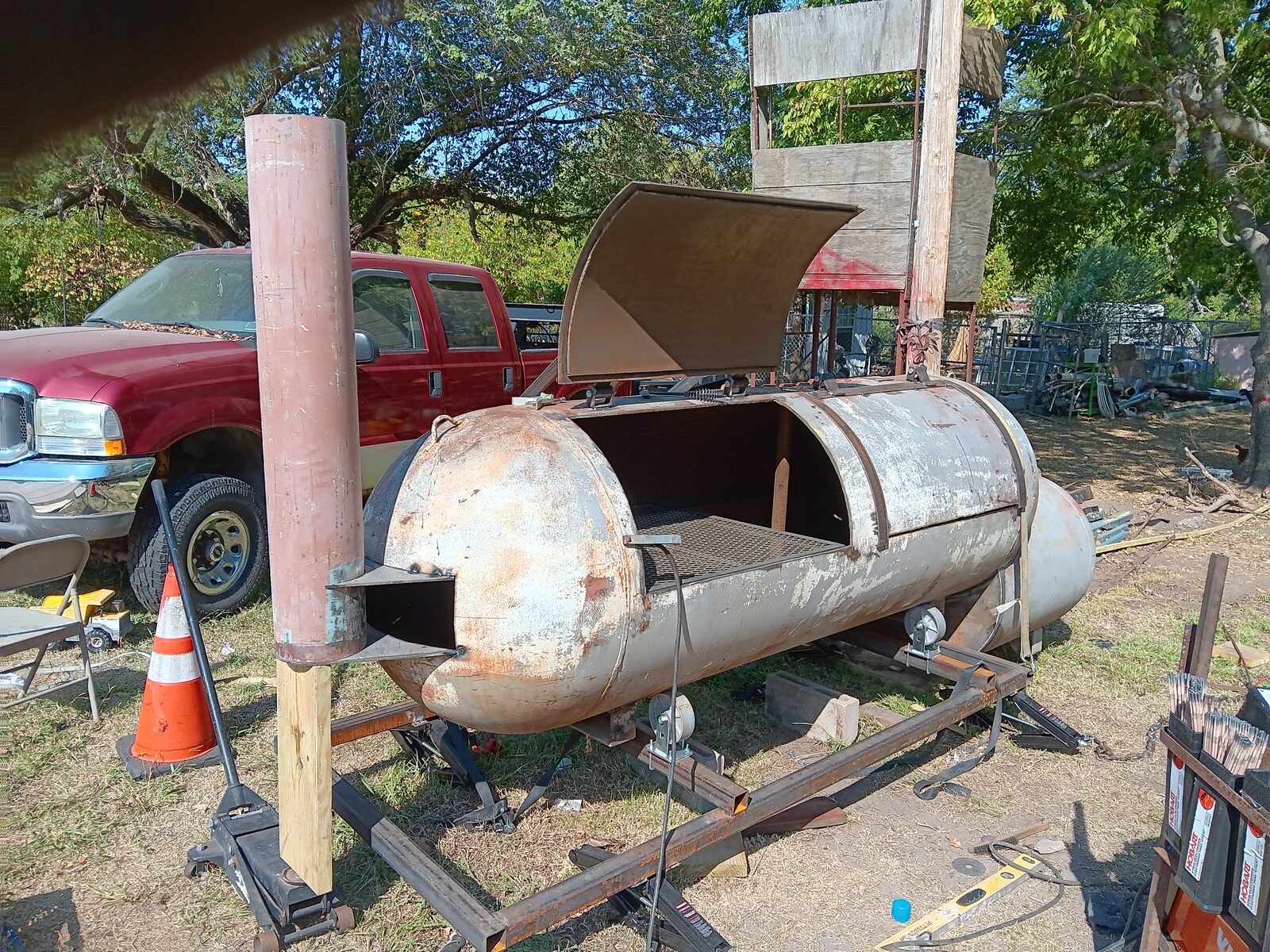
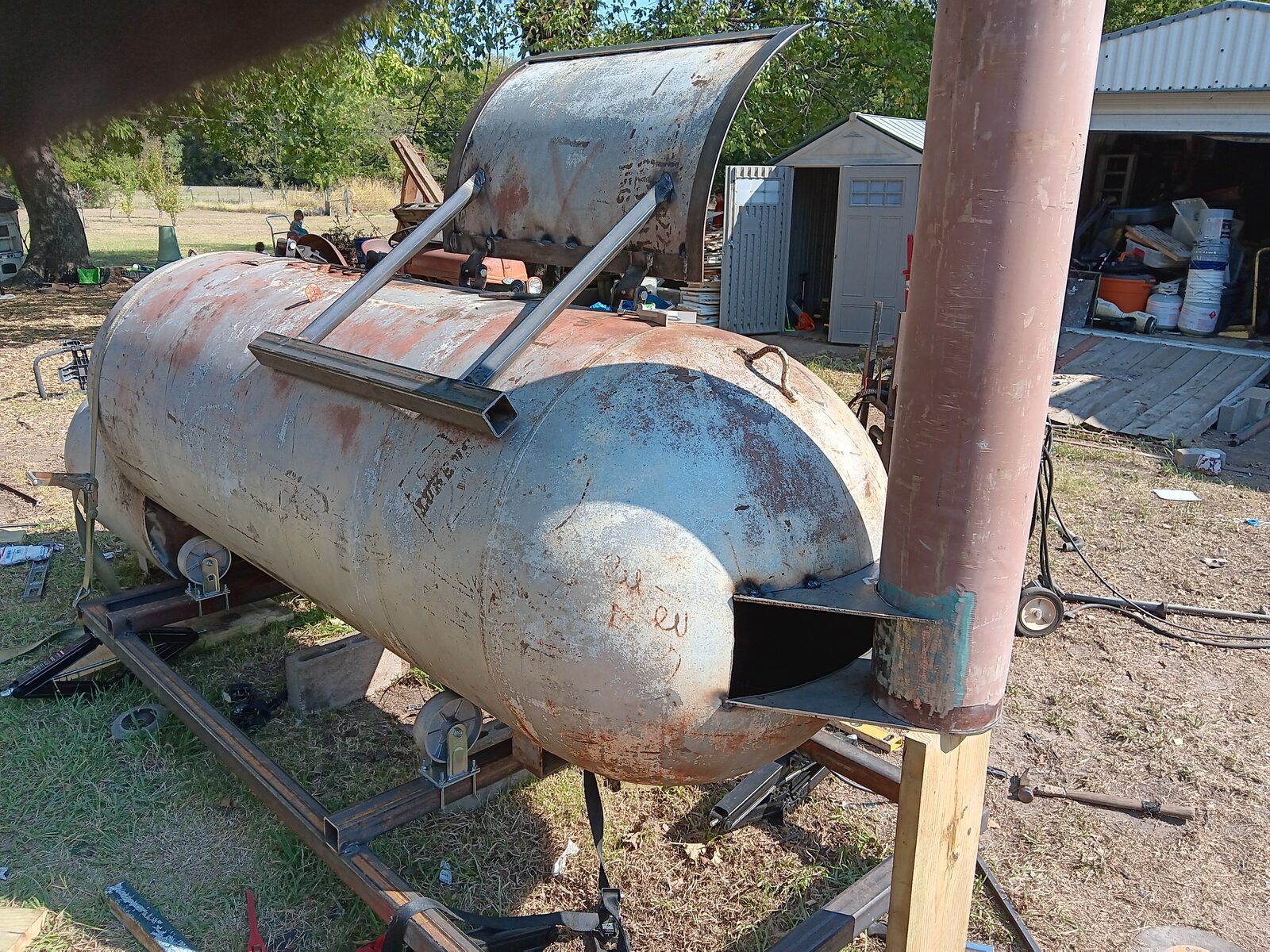
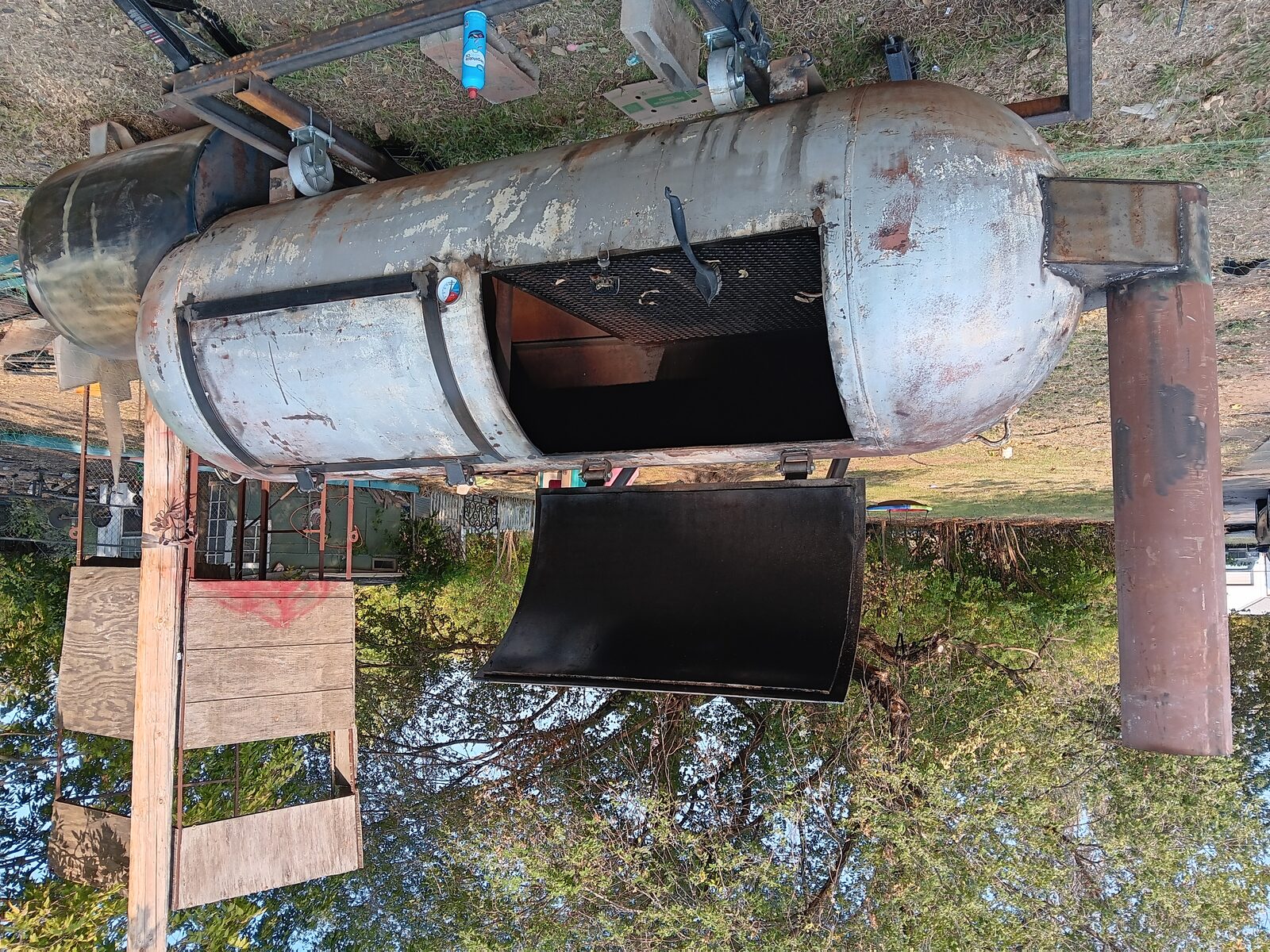
The firebox door got its own fabrication session. A hinged door with a thermometer installed right at cooking height so you can read the chamber temperature without opening anything up.
On the Trailer
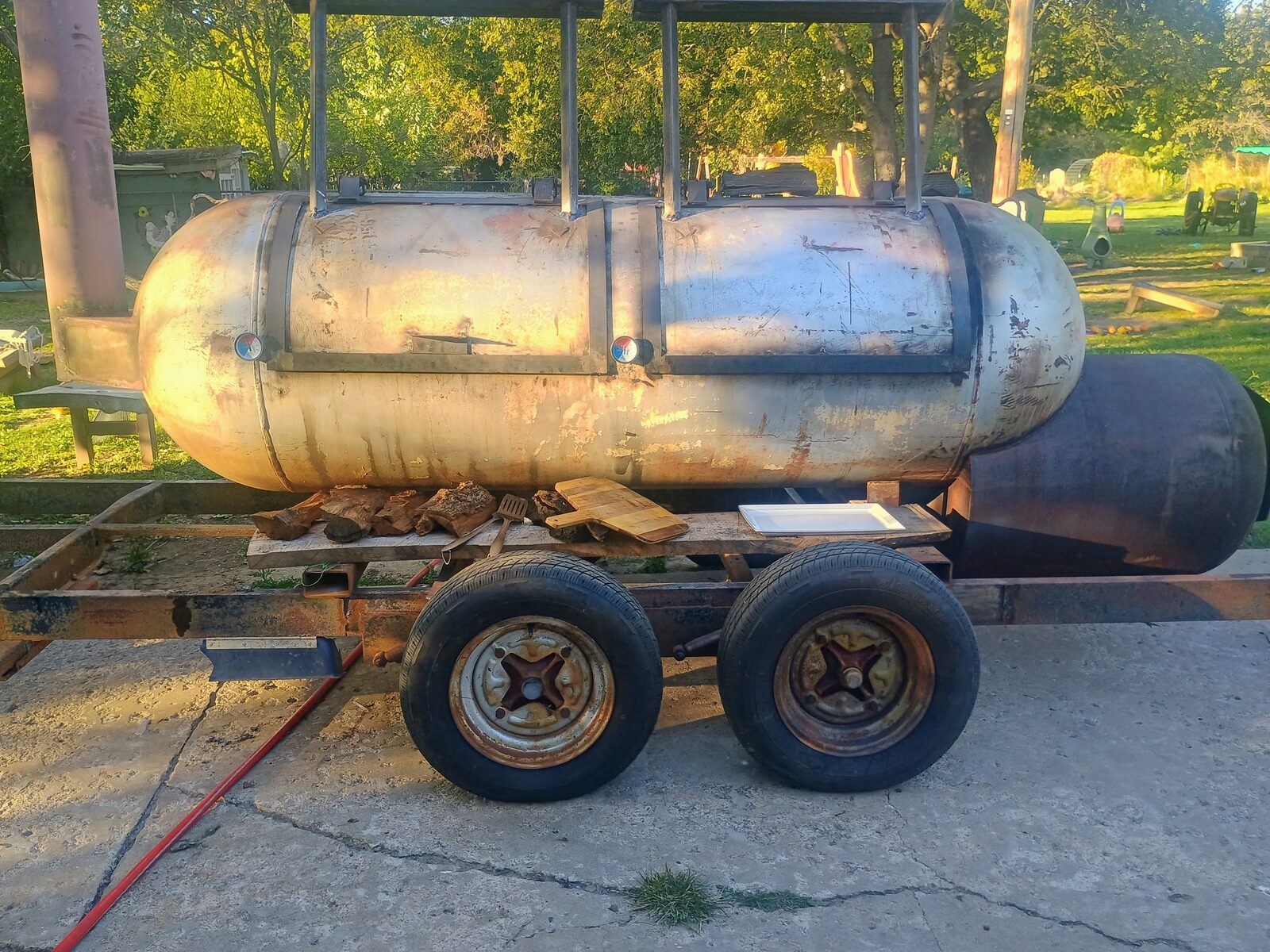
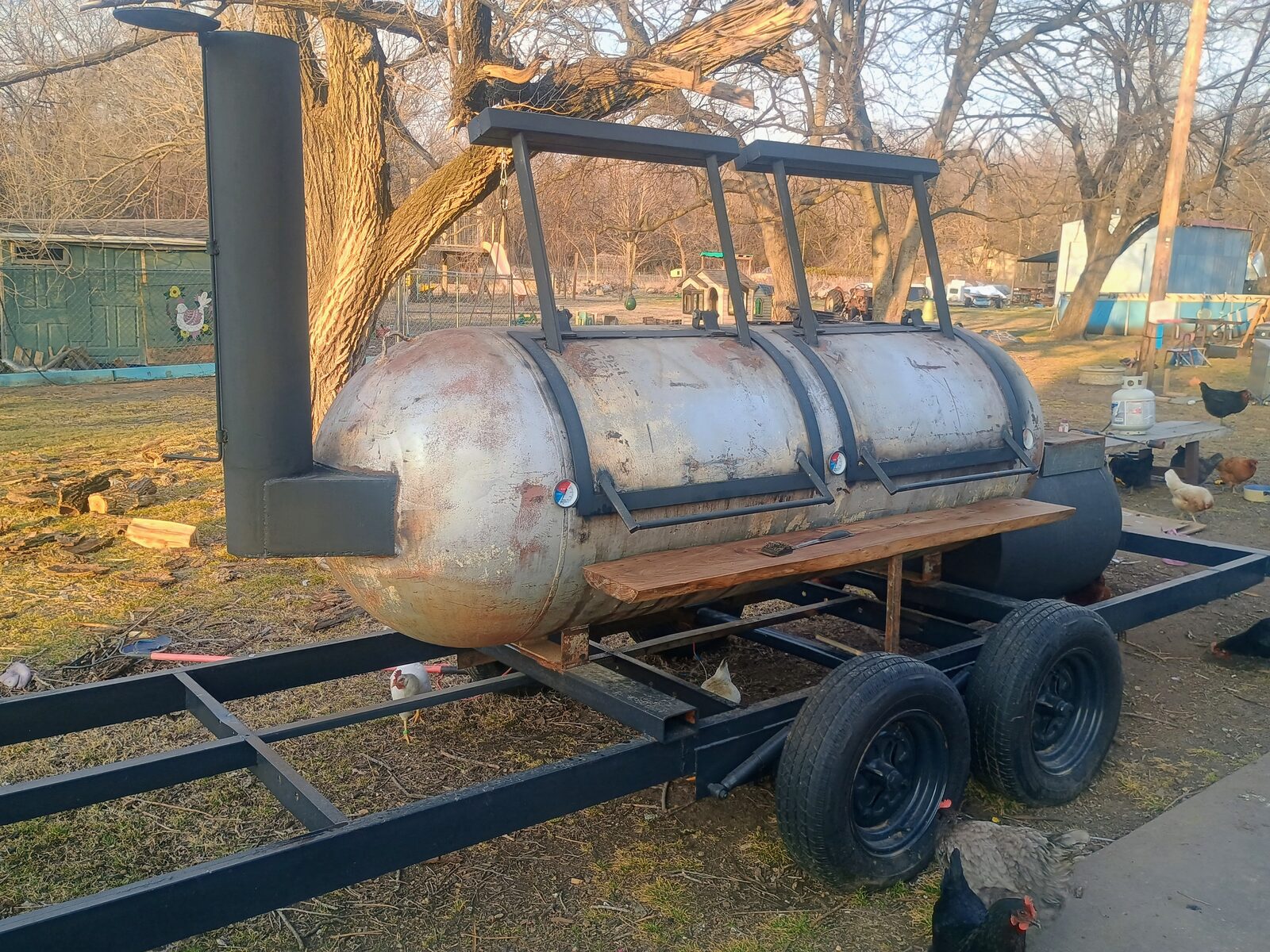
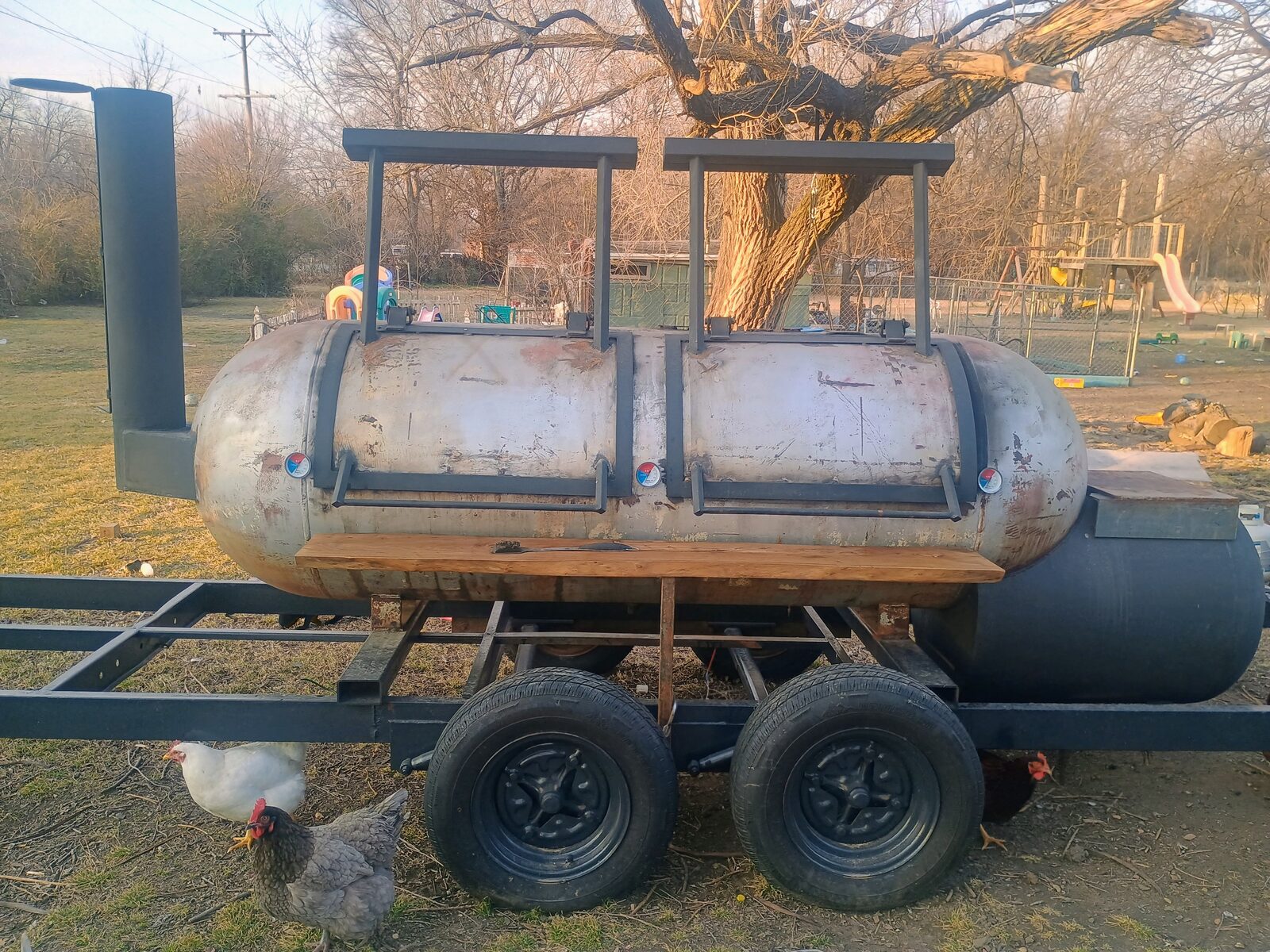
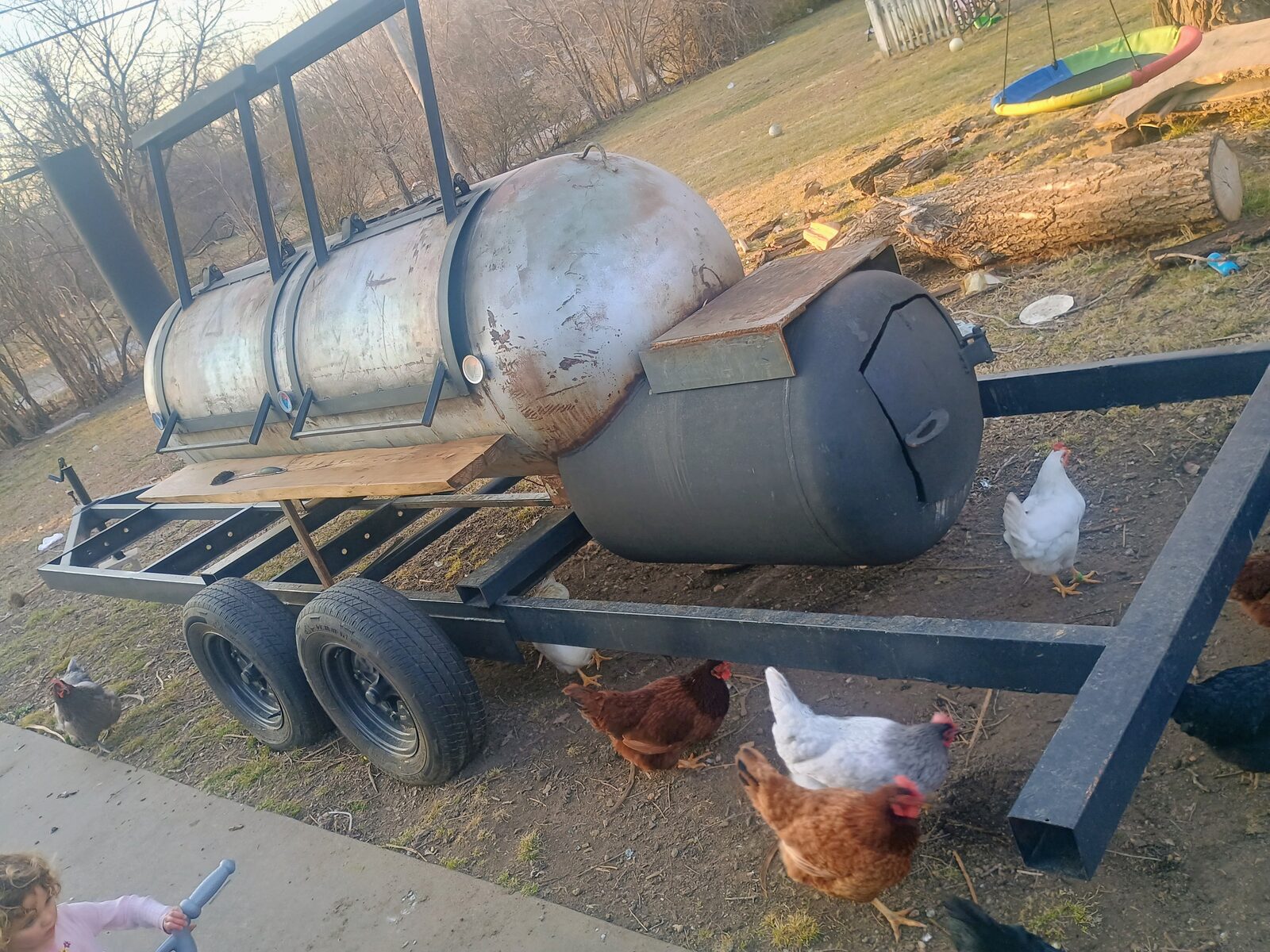
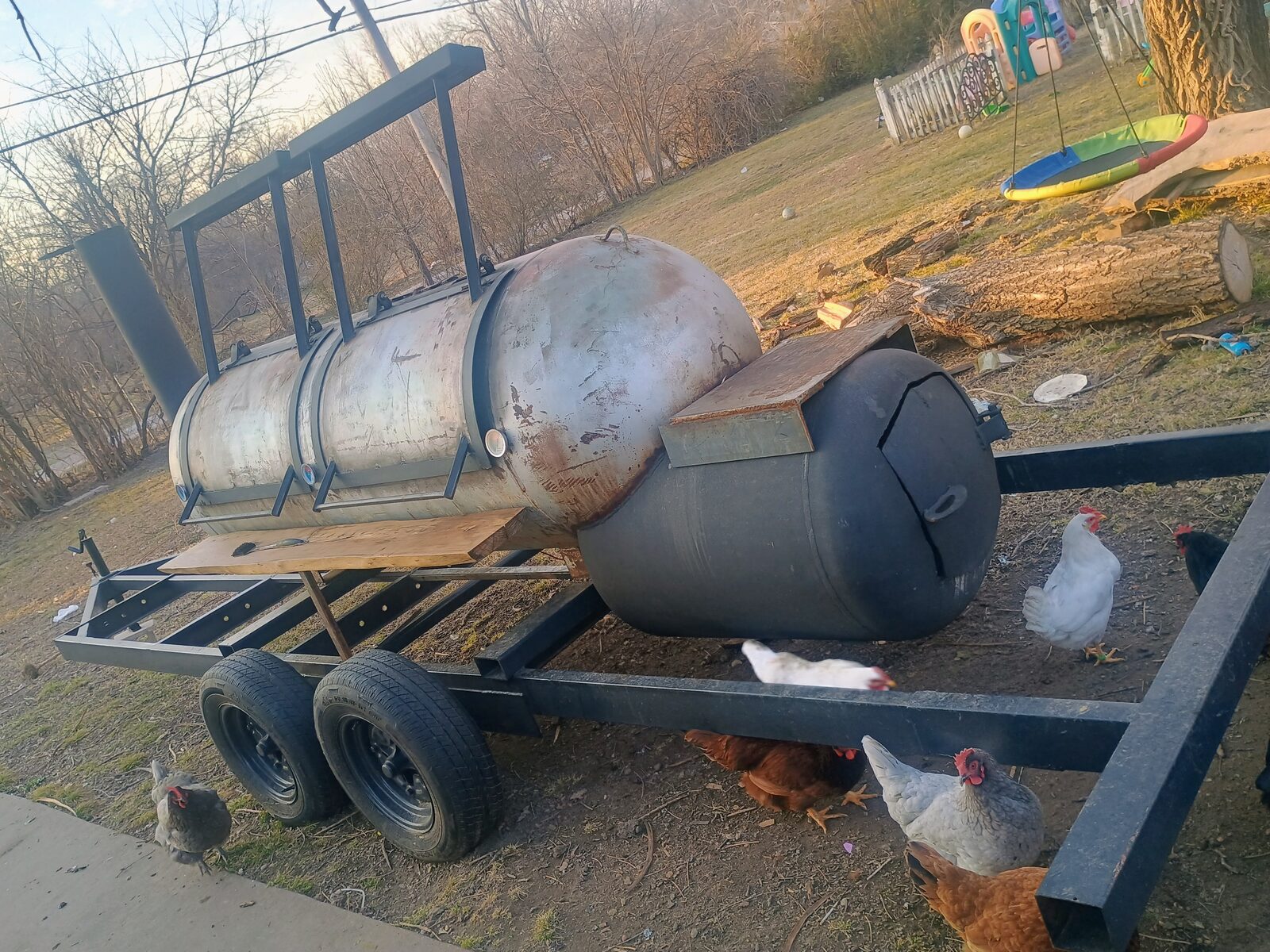
The roller frame was always a build tool, not the final mount. The smoker needed to be mobile. I welded a steel cradle onto a dual-axle trailer — the tank, firebox, chimney, and a wood shelf all mounted as one unit. A warming rack frame welded across the top gives you a place to hold things at temperature without direct heat.
The Finished Smoker
Paint, thermometers, and details. The whole rig got a coat of high-heat black paint. Two thermometer gauges on the main chamber. A wood counter shelf on the side for prep. The firebox has its own cleanout. The warming rack frame across the top. The chickens approve.
First Cook
This thing started as a rusted propane tank strapped to a trailer and turned into a fully mobile offset smoker built entirely in a residential driveway. Every weld, every cut, every hinge — MIG welder and angle grinder.
The first real cook: chicken kebab skewers and burger patties on the expanded metal grate. Temperature probe in. Smoke rolling. It works.
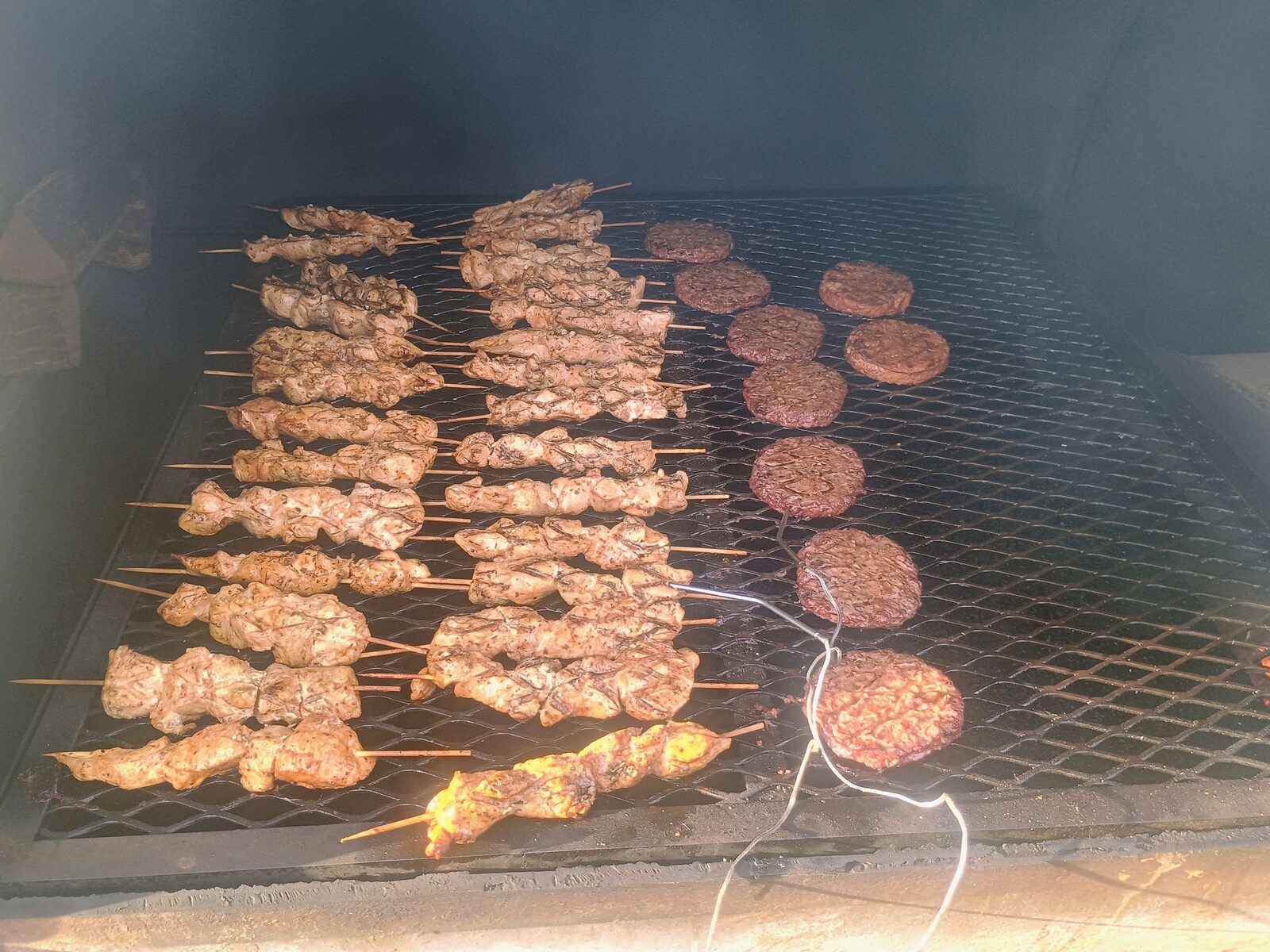
Worth every late night in the driveway.
Sourcing Tanks
Propane tanks like these are decommissioned and sold from gas companies. You can find them sitting in rural yards, behind stations, or listed on marketplace. Getting them home is half the adventure.